Healthcare
Federal Council Proposes Raising Minimum Health Insurance Deductible by 100 Francs
The Swiss Federal Council has put forward a proposal to increase the country's minimum health insurance deductible by 100 francs, a move intended to curb rising healthcare expenditure by discouraging non-urgent medical consultations.
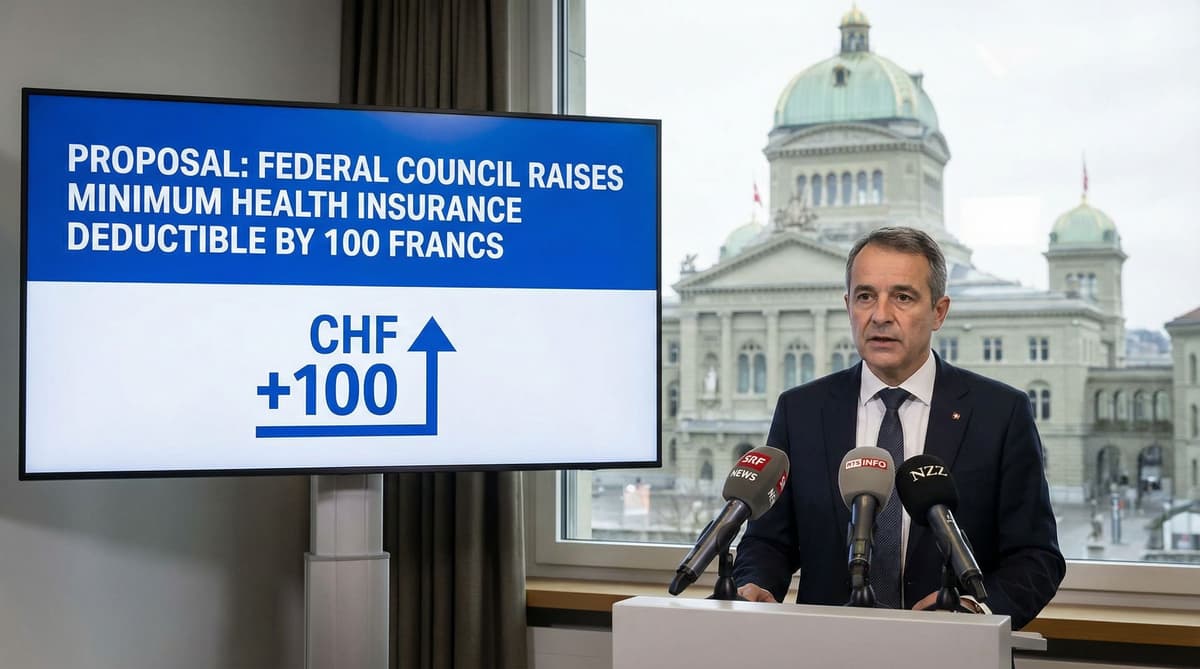
The Swiss Federal Council has made a decisive and controversial move, formally proposing to hike the country's minimum health insurance deductible by a significant 100 francs. This is not merely a suggestion; it is a calculated legislative maneuver designed to shake up the foundations of the mandatory basic insurance system. By targeting the deductible—the threshold amount residents must pay out-of-pocket before their insurance coverage begins—the government is directly confronting the escalating costs of the national healthcare system.
This proposal signals a shift in strategy from Bern, moving from passive observation to active financial intervention. The 100 franc increase represents a tangible hit to the wallets of insured residents, effectively raising the barrier to entry for medical reimbursement. As the Federal Council pushes this agenda forward, it underscores a critical reality: the status quo is no longer sustainable, and the government is prepared to enforce stricter financial parameters to stabilize the sector.
Curbing Consumption: The War on Trivial Visits
The rationale behind this sharp increase is unambiguous: the government intends to aggressively dissuade the public from seeking medical attention for non-urgent matters. Authorities argue that the system is currently clogged with patients seeking care for "trivial issues," a behavior that drives up administrative and operational costs without delivering critical health outcomes. By raising the financial stakes, the Federal Council aims to force a behavioral change, compelling residents to think twice before booking a consultation.
This approach frames healthcare access through a lens of financial discipline. The logic is stark: if the initial cost of a doctor's visit is higher, unnecessary consumption will plummet. However, this strategy is poised to spark intense debate. While the government views this as a necessary efficiency measure to prevent the system from being overwhelmed by minor ailments, critics may view it as a barrier that could discourage necessary preventative care. The message from Bern is clear, however: the era of casual medical consultation is facing a crackdown.
The Financial Reality for Swiss Residents
For the average Swiss resident, a 100 franc surge in the minimum deductible is a direct financial confrontation. In a country already grappling with a high cost of living, this proposal adds another layer of mandatory expense for those who utilize healthcare services. The "Franchise" system is a cornerstone of Swiss health insurance, and altering the minimum floor affects the widest demographic of insured individuals, particularly those who opt for the lowest possible monthly premiums by accepting higher deductibles.
This move effectively shifts a larger portion of the immediate financial burden from the collective insurance pool back onto the individual patient. It is a stark reminder that the costs of maintaining a world-class healthcare system are being redistributed. Residents must now prepare for the possibility that their first few medical interactions of the year will be entirely self-funded to a higher degree than before, a change that demands immediate re-evaluation of personal household budgets across the cantons.