Graubünden
Graubünden prepares action plan against organised crime
Graubünden plans a dedicated action plan and an external expert report on organised crime. The initiative follows parliamentary pressure and will examine measures for authorities, businesses and wider society.
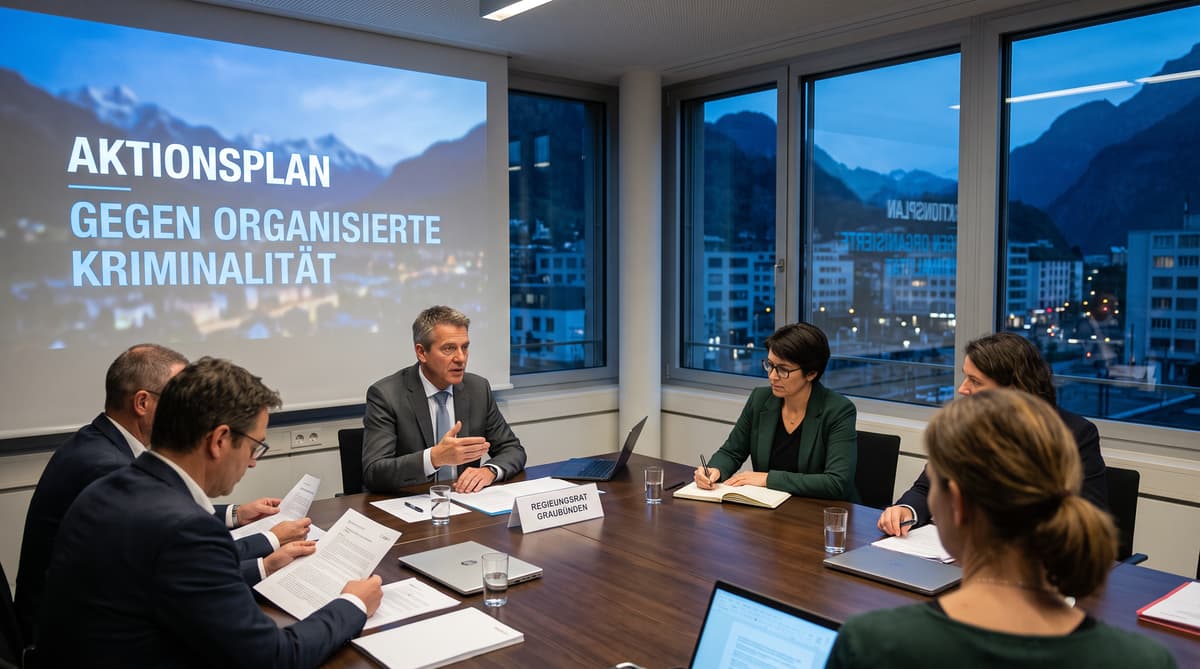
Graubünden is preparing a dedicated plan against organised crime after a parliamentary intervention exposed weaknesses in cooperation over residence permits. The cantonal government announced the action plan and an external expert report on September 14, 2026, in a response to Centre Party lawmaker Sandra Maissen. The report will examine measures for public authorities, businesses and wider society.
The move follows the arrests of alleged members of the Camorra, the 'Ndrangheta and a Balkan criminal group during a Europol operation at the end of February. Four of the seven people arrested lived in Roveredo, in the canton’s southern Val Mesolcina, and held valid B residence permits. One had previously been refused a permit in neighbouring Ticino. Maissen’s parliamentary question said Graubünden authorities did not learn about that decision for months.
The case placed a local administrative issue inside a wider European criminal investigation. It also focused attention on Val Mesolcina, a region that has long been regarded as vulnerable to money laundering. The planned report will give the canton an outside assessment while Graubünden works out how to implement Switzerland’s national strategy against organised crime.
Roveredo Case Exposes Cantonal Information Gaps
Four of the seven people arrested in the Europol operation were living in Roveredo, making the small municipality the focal point of the parliamentary debate. The arrests involved alleged links to three criminal networks: the Camorra, the 'Ndrangheta and a Balkan clan. The suspects had valid B residence permits in Graubünden.
The parliamentary motion raised concerns about information sharing between cantons. One suspect had previously been denied a residence permit in Ticino, yet Graubünden authorities were reportedly unaware of that decision for months. The episode has prompted scrutiny of how Swiss cantons exchange information when applicants move across internal borders.
Graubünden has eleven administrative districts, and the issue is especially sensitive in the Moesa region, which connects southern Switzerland with Italy and includes Roveredo. The government has not said that existing controls failed across the canton. It has argued that its information and monitoring mechanisms have proved effective, while acknowledging that further measures require examination under the new action plan.
The planned external report is expected to assess these procedures without replacing criminal investigations led by police and prosecutors.
Canton Tightens Permit Checks in Moesa
Two of the four requests in the parliamentary motion have already been implemented, according to the Graubünden government. The canton has a binding procedure for checking immigration law procedures in other cantons. It also says the monitoring tools permitted by law are used systematically.
The rules differ according to nationality. For third-country nationals, authorities normally require a copy of a criminal record. For citizens of European Union and European Free Trade Association states, authorities seek that document when there are grounds for suspicion. The government has added a temporary measure in the Moesa region: every new EU or EFTA residence permit application must include a criminal record extract.
The government has asked parliament to recognise the completed requests as dealt with and defer the remaining two for further consideration. That position reflects a legal and administrative distinction between measures already available to the canton and proposals that require a broader policy review.
The planned action plan will therefore build on existing checks rather than start from zero. Its findings could determine whether temporary regional measures become permanent or whether controls are redesigned across Graubünden.