Government
Swiss Government to Release COVID-19 Vaccine Contracts After Court Ruling
Following a Federal Administrative Court decision, the Swiss government has announced it will not appeal and is now prepared to disclose its contracts for the purchase of COVID-19 vaccines. The manufacturers involved may still appeal to protect their commercial secrets.
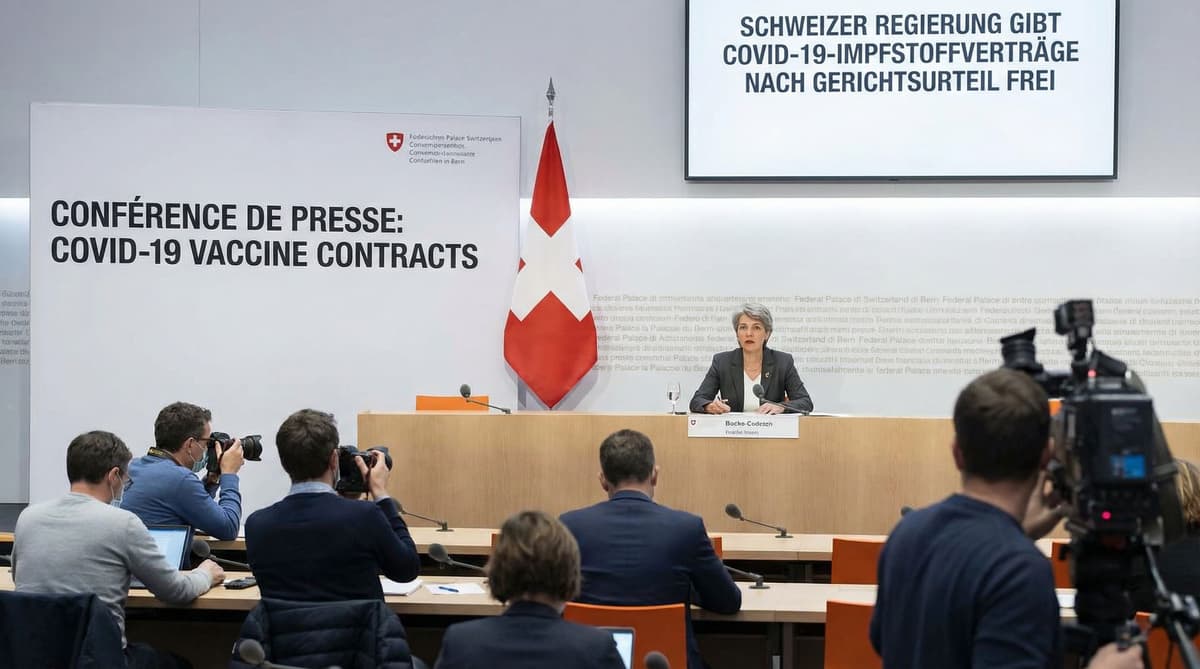
The era of pandemic secrecy is crashing down in Switzerland. In a landmark move for public transparency, the Swiss government has officially surrendered its fight to keep COVID-19 vaccine contracts hidden from the public eye. The Federal Office of Public Health (FOPH) announced Monday it will not appeal a decisive Federal Administrative Court ruling that mandates the full disclosure of these highly contested agreements. For years, the exact terms, prices, and delivery conditions locked behind closed doors have fueled intense public speculation. Now, the vault is opening. This monumental pivot marks a dramatic shift in Bern's approach to pandemic-era accountability. Under the Transparency Act, determined plaintiffs relentlessly pursued access to the contracts struck between the FOPH and the army pharmacy. While the government fiercely blocked these requests at the end of 2023, the legal tide has irreversibly turned. The public's right to know has triumphed over bureaucratic resistance. However, the final unveiling hangs in a delicate balance. While the state steps back, the corporate giants who manufactured the vaccines may still launch their own legal blockades. The battle for absolute transparency enters its most critical phase yet.
The Court's Decisive Blow
A resounding judicial decree has shattered the government's shield of confidentiality. In a sweeping judgment published this February, the Federal Administrative Court dismantled every defense the FOPH had constructed to deny public access. The court's message was unequivocal: no exceptional legal grounds exist to justify keeping these pandemic-era contracts in the dark. Previously, federal authorities argued that unmasking the agreements could severely jeopardize Switzerland's foreign policy interests. The court completely invalidated this fear, finding absolutely no evidence to support such a drastic claim. Furthermore, the judges highlighted a glaring lack of proof regarding any legitimate interest in concealing critical details like vaccine prices and delivery conditions. This ruling represents a staggering defeat for the culture of state secrecy. By systematically tearing down the government's arguments, the judiciary has reinforced the supremacy of the Transparency Act. The decision not only vindicates the plaintiffs who fought tirelessly for access but also sets a formidable legal precedent for future public health crises. The burden of proof for confidentiality has skyrocketed, ensuring that future administrations will face immense hurdles if they attempt to obscure multi-million franc public health expenditures.
The Redacted Past
A history of black ink and hidden clauses is finally facing the light. Back in 2022, the FOPH attempted to placate growing public pressure by publishing heavily redacted versions of its contracts with six major pharmaceutical players: Moderna, Novavax, Pfizer, Janssen, AstraZeneca, and CureVac. These sanitized documents offered little more than an illusion of transparency, with critical financial and logistical data obscured from taxpayers. At the time, the FOPH defended this aggressive redaction strategy with a stark warning. Health officials argued that exposing the raw contracts in Switzerland alone would critically cripple the government's negotiating power in the terrifying event of a future pandemic. They feared that revealing their hand would leave the nation vulnerable to price gouging by global pharmaceutical conglomerates. Yet, the recent court ruling exposes the fragility of this defense. The judiciary found this hypothetical future risk insufficient to override the immediate democratic right to information. The transition from the heavily censored documents of 2022 to the imminent release of unredacted files highlights a dramatic evolution in Swiss public policy. The nation is actively choosing democratic accountability over speculative future leverage.