Geneva Airport
New EU Biometric System Causes 'Interminable Queues' at Geneva Airport
The rollout of the new European Entry/Exit System (EES) is causing significant delays and hours-long queues for non-EU tourists at Geneva Airport, prompting airlines to warn of wider travel chaos as the winter ski season peaks.
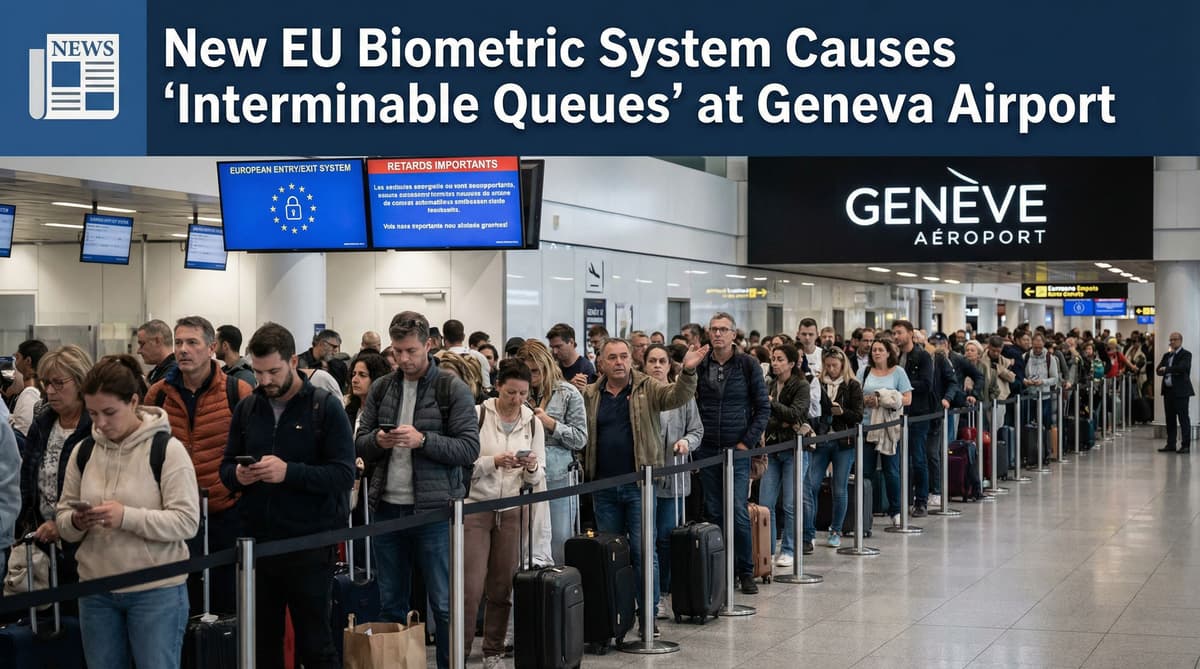
A staggering breakdown in border efficiency has hit Geneva Airport, where the rollout of the European Union's new Entry/Exit System (EES) has triggered what public broadcaster RTS describes as "interminable queues." Non-EU tourists, particularly those arriving from the UK for the peak winter ski season, are confronting a grueling reality: wait times soaring up to two and a half hours just to cross the border.
The biometric system, which digitally registers travelers from outside the EU and EFTA, was implemented in Switzerland between October and November 2025. Instead of streamlining entry, it has created a bottleneck of critical proportions. While heavy passenger volume is expected during the Alpine rush, RTS reports that current delays are "exceptional," far surpassing historical norms. The system is buckling under the pressure, turning the start of dream ski holidays into an endurance test of standing in line.
Operations Scramble: Staff Doubled as Luggage Piles Up
Airport authorities are scrambling to contain the fallout as the border crisis spills over into logistics. The delays at passport control are so severe that they have triggered a secondary crisis in the baggage claim area: massive luggage pile-ups waiting for passengers who are still stuck in immigration lines. In a desperate bid to manage the chaos, Geneva Airport has doubled the number of agents deployed in the arrivals hall.
Officials acknowledge the severity of the situation, confirming that bottlenecks have formed during peak travel windows. A dedicated team has now been deployed solely to address the mounting luggage congestion. While airport officials insist they are "working to resolve the problem," the sheer scale of the disruption suggests that the new biometric protocols are overwhelming current infrastructure capabilities.
Aviation Giants Revolt: Industry Slams 'Chronic' EU Failures
The crisis at Geneva is not an isolated incident but a symptom of a wider European failure. In a bold move, three of the aviation industry's most powerful bodies—Airports Council International (ACI) Europe, Airlines for Europe (A4E), and IATA—have launched a scathing critique of the European Commission. They argue the EES is causing "persistent excessive waiting times of up to 2 hours" across the continent, not just in Switzerland.
The groups did not mince words, attributing the chaos to "chronic border control understaffing" and "unresolved technology issues." They specifically highlighted the failure of automation systems and the "very limited uptake" of the Frontex pre-registration app by Schengen states. This unified front from the aviation sector underscores a critical lack of confidence in the EU's ability to manage its own borders without crippling the travel industry.