employment
Gender Pay Gap Persists: Women Earn 12% Less in Switzerland
Latest Federal Statistical Office data reveals continuing wage disparity, with women earning 12% less than male colleagues in equivalent positions.
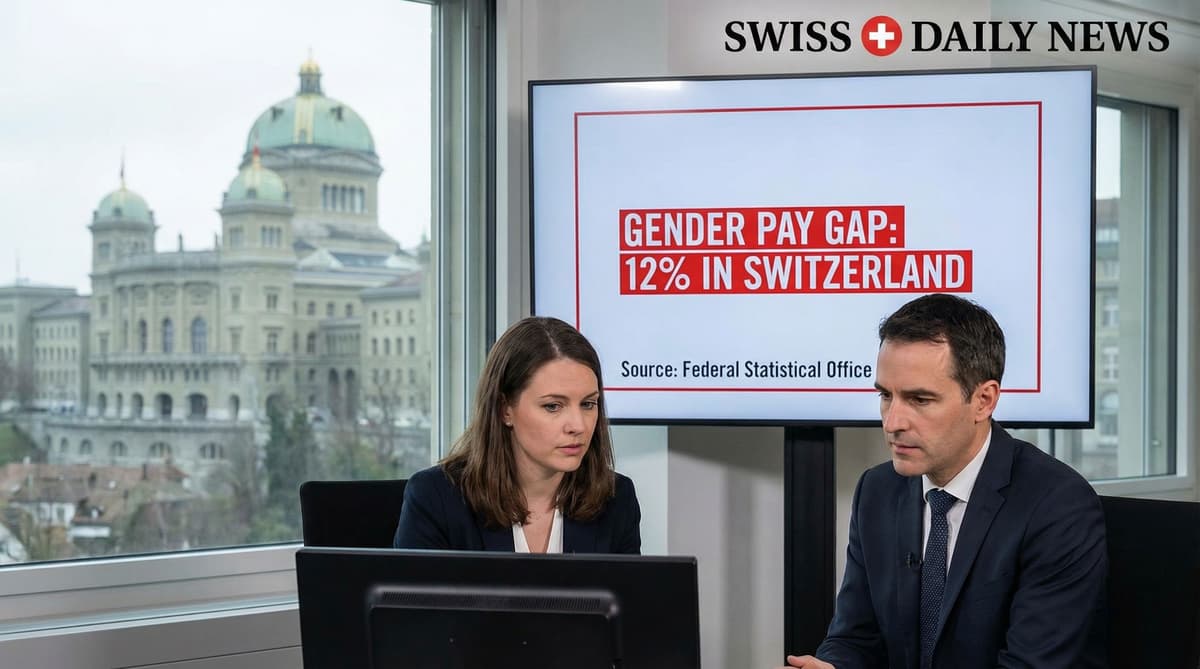
Switzerland confronts a stubborn economic reality: the gender pay gap isn't just existing; it's thriving. New data from the Federal Statistical Office (FSO) delivers a sobering verdict for 2024—women in Switzerland earn a staggering 12% less than their male counterparts. While the nation prides itself on efficiency and progress, the wallet tells a different story.
For a full-time position—defined as working 90% or more of the day—the median wage for men stands at a robust CHF 90,800. In stark contrast, women in equivalent roles take home just CHF 80,000. That is a CHF 10,800 deficit simply for being female in the workforce. While the overall median wage for all Swiss workers sits at CHF 81,500, this aggregate figure masks the critical disparity that continues to define the Swiss labor market. The numbers are clear: for half the population, the financial ladder has missing rungs.
The High Cost of Leadership
Climbing the corporate ladder does not close the gap; in fact, it widens the divide. One might expect that higher education and senior roles would act as the great equalizer, yet the FSO data reveals an alarming trend at the top. For executives and senior managers, the disparity swells to approximately 14%.
Male executives command a median salary of CHF 139,000, while their female peers in the same high-stakes roles earn CHF 120,000. The situation deteriorates further in the intellectual and scientific sectors—fields often touted as the future of the Swiss economy. Here, the gap explodes to 18%, with men earning CHF 117,000 against a woman's CHF 96,000. This data shatters the myth that the pay gap is merely a result of job selection; even in the most prestigious and specialized fields, the glass ceiling comes with a financial penalty.
The Entrepreneurial Chasm
If the corporate world is uneven, the landscape for self-employed women is treacherous. The most dramatic disparity in the entire report is found among Switzerland's entrepreneurs and freelancers. Self-employed women face a crushing wage gap, earning nearly a quarter less than self-employed men.
The numbers paint a bleak picture: a median income of CHF 65,000 for women versus CHF 84,000 for men. This massive divergence suggests structural or market-based undervaluing of female-led independent businesses. Whether due to sector choices, pricing power, or systemic bias, the independent route currently penalizes women far more severely than traditional employment. For the self-employed woman, the fight for financial equality is the steepest uphill battle in the Swiss economy.
A Glimmer of Parity
Amidst the statistics of inequality, there is one solitary exception: the apprentices. The FSO survey highlights that full-time apprentices are the only group where wages are generally equal, regardless of gender. In this formative stage of careers, the playing field appears level.
This parity among the youngest workers raises a critical question: at what point does the system break? If men and women enter the workforce on equal financial footing during their training, the 12% gap is something that accumulates and calcifies over time. It suggests that the disparity is not inherent to the workers' capability but is a product of the career lifecycle itself. This data point proves that pay equity is possible—we have it at the start line, but we lose it during the race.