Travel
Freezing Weather Forces SWISS to Cancel Dozens of Flights Across Europe
Severe winter weather conditions across Europe have led Swiss International Air Lines to cancel 57 flights since the start of the year, affecting over 7,400 passengers. The airline anticipates more cancellations, with key routes to Amsterdam, Berlin, and Frankfurt heavily impacted.
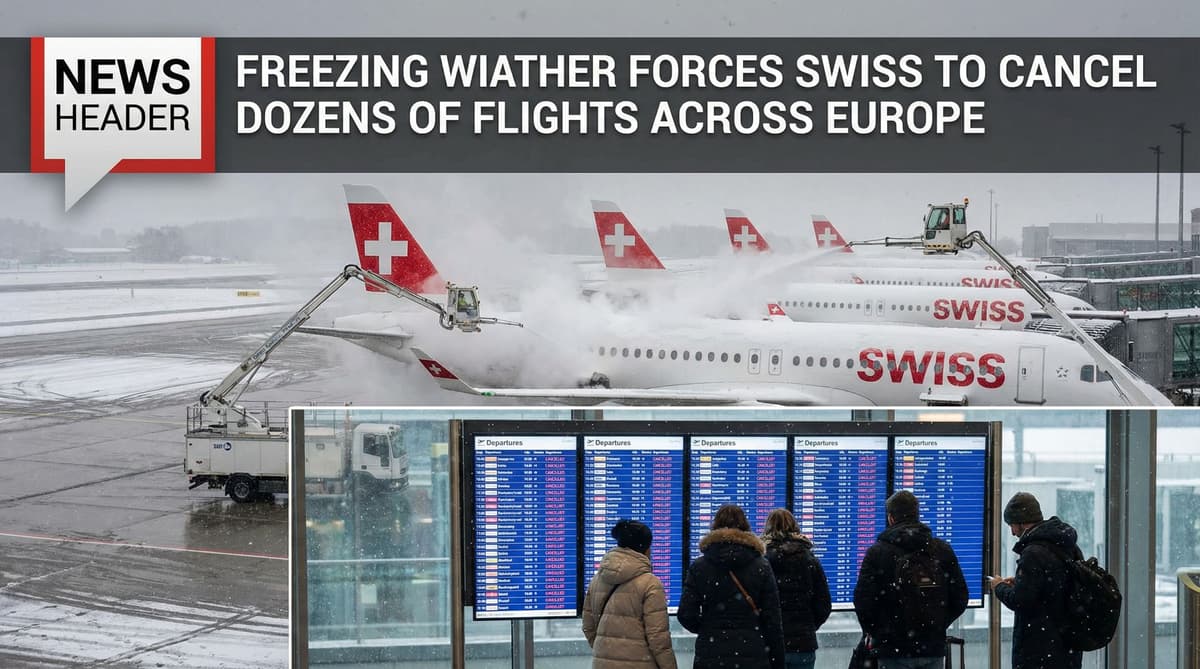
A staggering 7,430 passengers have been left stranded as severe winter weather slams the brakes on European aviation. Swiss International Air Lines (SWISS) is currently grappling with a logistical nightmare, having been forced to ground 57 flights since the start of the year. The Lufthansa subsidiary confirmed on Thursday that the situation is critical, with the icy grip of winter showing no immediate signs of releasing its hold on the continent's airspace.
The disruption is not merely a minor inconvenience; it is a significant operational blow. As snow and freezing temperatures sweep across the region, the airline has been compelled to make difficult decisions to ensure safety, leaving thousands of travelers scrambling for alternatives. The sheer volume of cancellations in just the first week of 2026 highlights the severity of the meteorological conditions confronting the carrier. With the weather remaining volatile, SWISS has issued a stark warning: expect more turbulence ahead. The airline anticipates that further cancellations will be unavoidable in the coming days, creating a ripple effect of delays and frustration for travelers attempting to navigate the post-holiday season.
Key European Arteries Severed
While the freeze is widespread, the connection to Amsterdam has been decimated. In a dramatic blow to connectivity, 42 flights to the Dutch capital have been slashed from the schedule since New Year's Day, making it the single hardest-hit route in the network. For business travelers and tourists alike, this represents a near-total collapse of reliable service on one of Europe's busiest corridors.
The pain is spreading rapidly beyond the Netherlands. SWISS has confirmed that the chaos will extend through the weekend, with a further 21 flights already axed between Thursday and Saturday. These preemptive cancellations are severing vital links to major hubs including Berlin, Frankfurt, and Luxembourg. This specific wave of weekend disruptions alone impacts another 1,390 travelers, compounding the misery. The airline's inability to maintain these high-frequency routes underscores the intensity of the weather system battering Northern and Central Europe. Passengers holding tickets for these destinations are now confronting a travel landscape defined by uncertainty and significant delays.
Operational War Room Activated
SWISS is now operating on a war footing. The airline has deployed additional employees to the front lines to manage the "significantly increased workload" caused by the mass rebooking of passengers and logistical reshuffling. Every decision is now a race against the elements. "We are in close contact with MeteoSwiss and are looking closely at every single day and every destination," the airline stated, emphasizing a strategy of hyper-vigilance.
The situation remains fluid and dangerous. While the airline aims for predictability, the dynamic nature of the storm fronts means that short-notice cancellations are a persistent threat. SWISS is attempting to mitigate the fallout by cancelling flights as early as possible to minimize passenger inconvenience, but the reality is a logistical scramble. The carrier admits that exactly which airports will be next to fall victim to the freeze remains unclear, leaving operations in a fragile state of flux. This is a stress test for the airline's resilience, requiring constant coordination between meteorological experts and flight operations teams to salvage what remains of the schedule.