automotive
Electric Vehicle Sales Decline in Switzerland for First Time
Swiss electric car market shows first-ever decline with sales dropping to 19.3% of new vehicles in 2024, down from 20.9% in 2023, attributed to new import taxes.
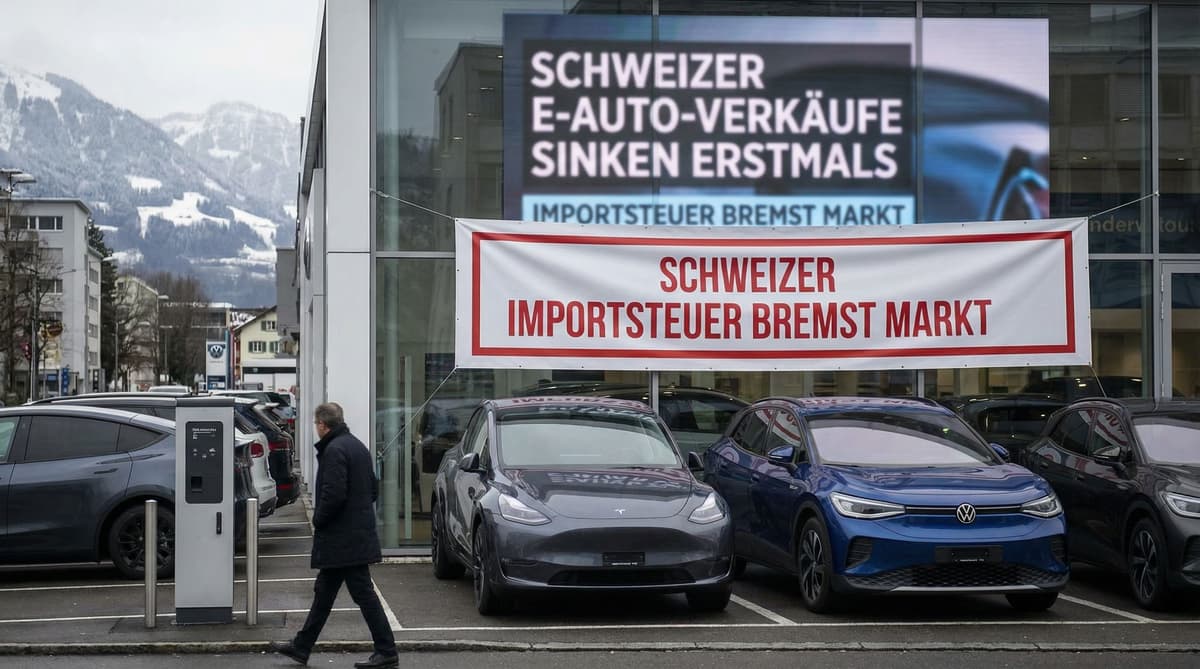
The unstoppable rise of the electric vehicle in Switzerland has finally hit a wall. For the first time in history, the Swiss market is contracting, shattering the illusion of perpetual growth. Provisional data reveals a stark reality: the market share of fully electric vehicles plummeted to 19.3% in 2024, a significant regression from the 20.9% peak achieved in 2023. This is not merely a stagnation; it is a retreat.
Swiss eMobility, the nation’s leading electric mobility association, confirmed the grim milestone on January 1, marking the end of a years-long streak of double-digit gains. While the association attempts to frame this as a "temporary dip," the numbers speak to a deeper hesitation among Swiss consumers. The momentum that once seemed inevitable has been disrupted, signaling that the transition to green mobility is far from guaranteed. Switzerland, once a frontrunner, is now losing ground to international competitors, raising urgent questions about the nation's commitment to its own environmental targets.
Policy Shock: The Tax That Braked Momentum
Policy decisions have immediate consequences, and the Federal Council's move to tax electric imports has acted as a powerful handbrake. Swiss eMobility points the finger directly at the 4% import tax introduced on January 1, 2024, identifying it as the primary culprit for this market contraction. The association describes the downturn as "disappointing but foreseeable," a direct result of removing financial incentives before the market had fully matured.
Coupled with a distinct lack of regulatory pressure to enforce CO2 emission targets, the financial landscape for potential EV buyers has shifted dramatically. The government's strategy has backfired, chilling demand exactly when acceleration was needed. While the market showed signs of a slight recovery in the final two quarters—aligning with late-year expectations—the damage was already done. The removal of the tax exemption has sent a clear, negative signal to the market: the era of government-subsidized adoption is over, and the consumer is now footing the full bill.
Tesla Defies the Gravity of the Market
Amidst the general gloom of the sector, one titan remains seemingly invincible. The Tesla Model Y has not only weathered the storm but has surged ahead, cementing its status as the undisputed king of Swiss roads. It wasn't just the best-selling electric car of 2024; it was the best-selling car in Switzerland, period.
With over 6,500 units sold, Elon Musk’s flagship crossover actually increased its sales volume compared to the previous year, defying the national downward trend. This dominance highlights a critical bifurcation in the market: while the general appetite for electric transition wavers, the demand for premium, established brand leaders remains voracious. Tesla's performance proves that Swiss consumers are still willing to buy electric—provided the product delivers undeniable value and status, regardless of the broader economic headwinds.