politics
A Decisive Year for Switzerland-EU Relations: Future of Free Movement Hangs in the Balance
Following the conclusion of a new treaty package in late 2025, the year 2026 is set to be decisive for the future relationship between Switzerland and the European Union. The outcome of upcoming political processes will be critical in determining the long-term status of the free movement of people agreement.
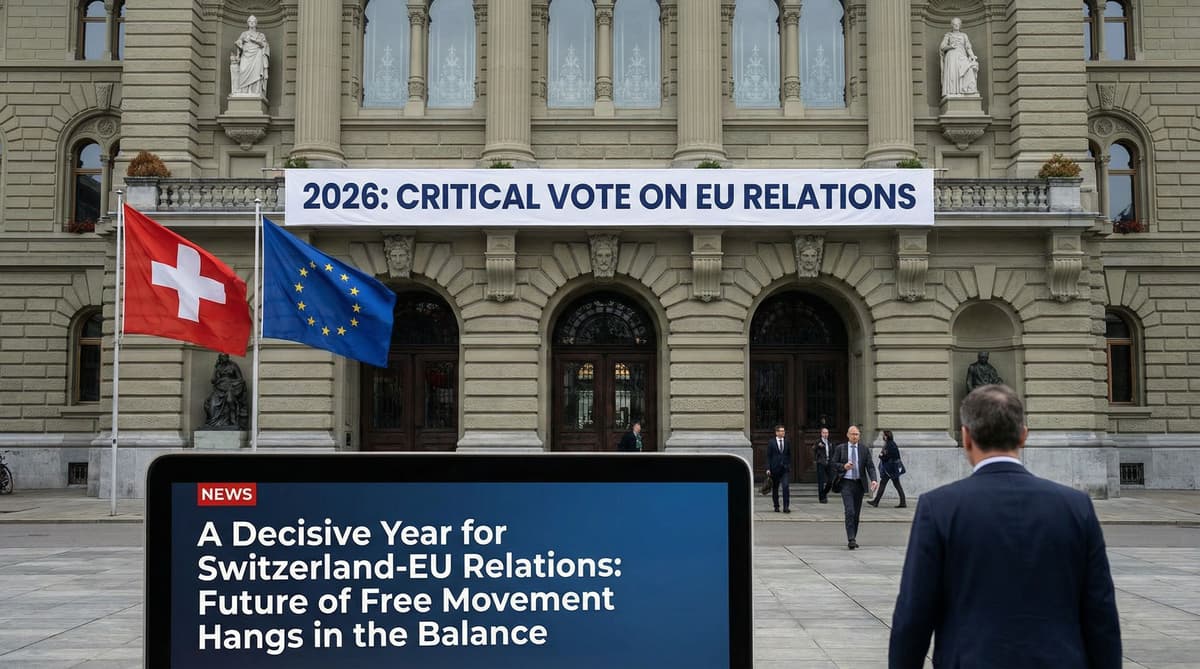
The diplomatic pleasantries are over; the political brawl begins now. 2026 has arrived, bringing with it a decisive confrontation that will define Switzerland's place in Europe for decades. While diplomats toasted to success last year, the reality on the ground is starkly different. The relationship between Bern and Brussels hangs by a thread, with the implementation of the newly minted agreements facing intense scrutiny. This is not merely a bureaucratic hurdle; it is a fundamental stress test for the Bilateral path.
The stakes could not be higher. After years of negotiation, the framework governing how the Swiss economy interacts with its largest trading partner is on the line. We are witnessing a pivotal moment where political maneuvering must yield to concrete results. The uncertainty that has plagued Swiss-EU relations is reaching a boiling point, and 2026 serves as the crucible. Failure to ratify and implement these measures could unravel the progress made, plunging the country into a new era of isolationism and economic uncertainty. The time for ambiguity has passed.
From Ink to Action: The Diplomatic Reality Check
A deceptive calm followed the flurry of activity in late 2024. In December 2024, negotiators concluded a comprehensive package of treaties, a milestone that seemed to signal the end of the deadlock. This momentum carried through to May 2025, when all parties officially signed the documents, seemingly sealing the deal. However, signing a treaty is merely the prologue in Swiss politics; the true narrative is written in the domestic arena.
Now, the ink is dry, but the path forward is treacherous. The transition from diplomatic handshake to legislative reality is where the friction intensifies. While the external negotiations have concluded, the internal battle for ratification is just heating up. The gap between international agreement and domestic acceptance remains a chasm that the Federal Council must bridge immediately. This year will ruthlessly expose whether the compromise struck in Brussels can survive the heat of Swiss democracy.
Free Movement: The Third Rail of Swiss Politics
At the heart of this confrontation lies the explosive issue of the free movement of people. It remains the single most contentious element of the package, a political third rail that few dare to touch without protective gear. The upcoming political processes in 2026 will determine the long-term status of this agreement, directly impacting the labor market, immigration levels, and social security systems. The EU views free movement as non-negotiable, a pillar of the single market, while domestic skeptics view it as a threat to sovereignty and wage protection.
This clash of ideologies is set to dominate the headlines. The outcome of this year's debates will dictate whether Swiss borders remain open to EU citizens under current terms or if a new, more restrictive regime will trigger the guillotine clause, endangering the entire bilateral structure. The economy demands access to talent, but the political winds are unpredictable. 2026 will force a choice: economic integration or strict border control. There is no middle ground left to explore.