Law
Teenage Pranks Not Grounds to Deny Swiss Citizenship, Court Rules
An Aargau court has overturned a naturalization refusal for an Eritrean woman, ruling that teenage pranks like egg-throwing are not sufficient grounds to deny a Swiss passport. The decision sets a precedent on the interpretation of integration criteria.
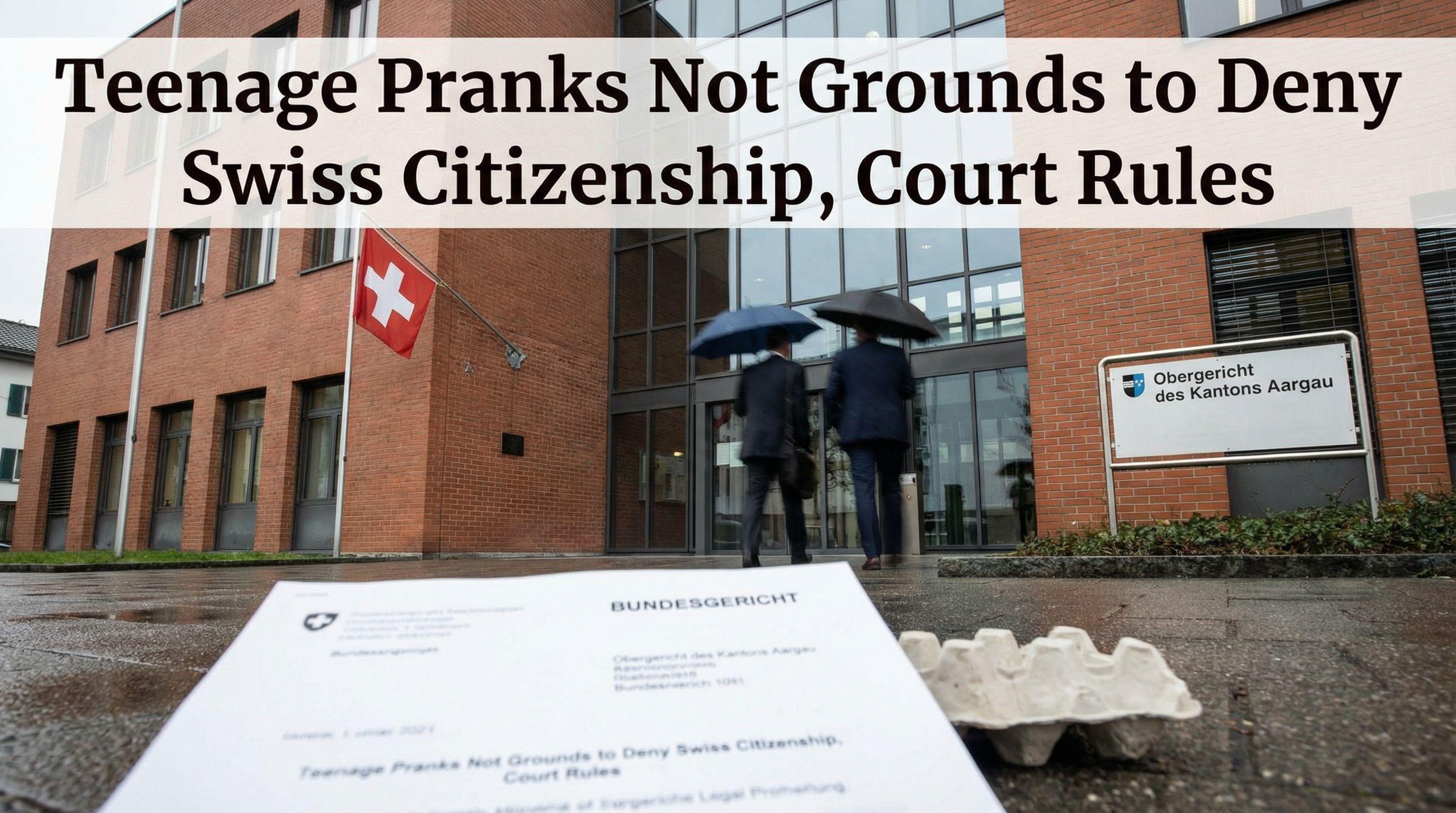
Judicial Rebuke: Court Slams 'Arbitrary' Citizenship Denial
In a decisive blow against bureaucratic overreach, the Administrative Court of the Canton of Aargau has quashed a controversial decision to deny Swiss citizenship to a young Eritrean woman. The court's ruling is unequivocal: rejecting an applicant based solely on minor juvenile pranks is not just harsh—it is unconstitutional. The local naturalization commission had blocked the young woman’s path to a Swiss passport, citing a 'conviction' during her application process. However, the court found this justification to be legally hollow, labeling the commission's stance as both arbitrary and incompatible with federal law.
This ruling sends a shockwave through the often-rigid cantonal naturalization systems, signaling that authorities cannot wield absolute power without context. The court emphasized that a criminal record does not automatically disqualify a candidate from becoming Swiss. Instead, decision-makers must weigh the severity of the act against the individual's overall integration. By overturning the refusal, the judiciary has drawn a firm line in the sand: the pursuit of a 'perfect' citizen cannot come at the expense of common sense and proportionality.
The 'Offense': Adolescent Mischief Meets Hardline Bureaucracy
The incident at the heart of this legal battle was not a violent crime or a threat to national security, but a classic case of teenage foolishness. At the age of 15, the applicant participated in an egg-throwing incident and a 'doorbell prank'—ringing every bell in an apartment block—alongside a group of peers. For these actions, the juvenile court issued nothing more than a warning, recognizing the behavior for what it was: a fleeting lapse in judgment typical of adolescence.
Despite the minor nature of the infraction, the Aargau naturalization commission treated the warning as a disqualifying 'conviction.' This draconian interpretation ignored the reality of the situation. The pranks occurred more than a year before the commission rendered its decision, yet they were used as the sole justification to deny the applicant's integration. The contrast is staggering: a teenager's momentary mischief was weaponized to block a life-altering legal status. The court's intervention highlights a critical failure in the commission's ability to distinguish between a genuine lack of integration and the harmless antics of youth.
Legal Precedent: Defining the Boundaries of Integration
This ruling establishes a critical precedent for how 'integration' is defined and enforced across Switzerland. The court dismantled the commission's argument, asserting that a conviction is merely one factor in a broader assessment, not an automatic veto. Authorities are now explicitly required to examine the specific circumstances, the applicant's culpability, and the likelihood of future offenses. The court declared that fearing the applicant would break the law again based on this isolated incident was unfounded.
By labeling the rejection as 'arbitrary,' the judges have stripped local committees of the ability to hide behind technicalities. The ruling mandates a holistic view of the applicant. In this case, the 'Lausbubenstreich' (rascal's prank) was a unique event committed in a collective context among young people. To deny successful integration on this basis alone violates the principles of fairness embedded in the Swiss Constitution. This decision forces a recalibration of standards, ensuring that the path to citizenship is guarded by law, not by capricious moral judgments of minor teenage errors.
The Verdict: A Victory for Proportionality
Justice has prevailed for the young Eritrean woman, who has now been granted her cantonal and communal citizenship, pending federal approval. This outcome is a significant victory for proportionality in a system often criticized for its severity. The court's decision to overturn the commission's refusal vindicates the applicant's claim to Swiss identity and exposes the flaws in a zero-tolerance approach to naturalization.
While the ruling is not yet final and could theoretically be appealed, the message is loud and clear: Switzerland demands integration, not perfection. The administrative court has effectively acted as a safeguard against administrative tyranny, ensuring that a doorbell prank does not carry a life sentence of exclusion. As Switzerland grapples with evolving definitions of citizenship, this case stands as a powerful reminder that the law must serve justice, not merely punish the growing pains of its future citizens.