Politics
Cantonal Votes: Zurich Rejects 30km/h Limit, Fribourg Says No to Minimum Wage, Vaud Expands Swiss Abroad Voting Rights
A roundup of key cantonal votes from November 30, 2025. Voters in canton Zurich have prevented the city from imposing a 30km/h speed limit on main roads. Canton Fribourg rejected a proposal for a minimum wage. Meanwhile, canton Vaud has granted its citizens living abroad the right to vote in Senate elections.
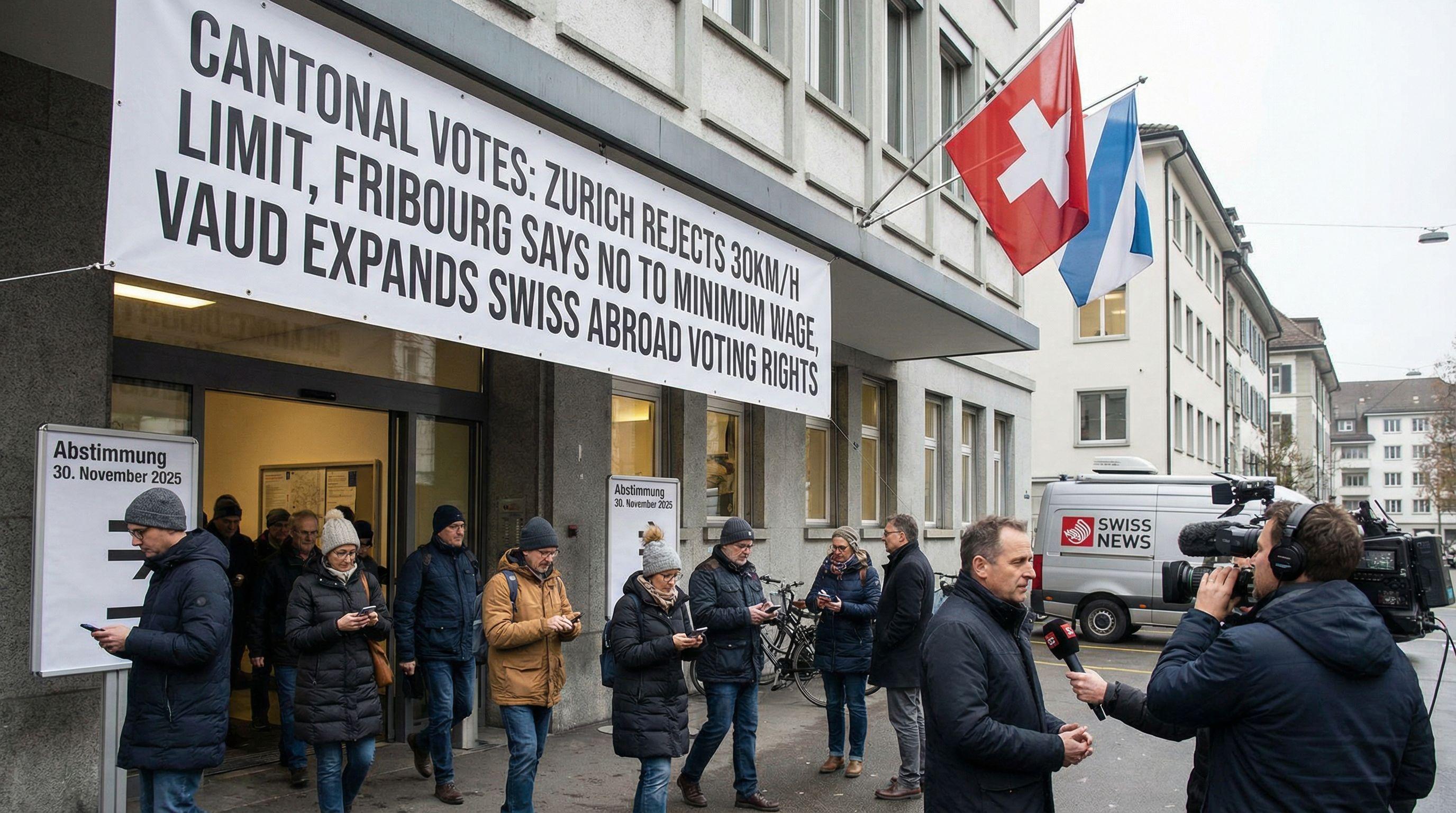
Cantonal Votes: A Tale of Three Cantons
In a vivid display of Swiss direct democracy, voters across three key cantons headed to the polls on November 30, 2025, delivering decisive verdicts on issues ranging from urban traffic control to social welfare and democratic rights. In Zurich, a right-leaning push successfully halted the implementation of 30km/h speed limits on major city roads. Meanwhile, canton Fribourg rejected a proposal to introduce a cantonal minimum wage, siding with business interests. In a contrasting move, canton Vaud significantly expanded the democratic rights of its citizens living abroad, granting them the ability to vote in Senate elections.
Zurich Hits the Brakes on 30km/h Speed Limits
Voters in canton Zurich have curtailed the power of its major cities, Zurich and Winterthur, to reduce speed limits on main roads. With a 56.77% majority, citizens approved a change to cantonal law that prohibits lowering the speed limit to 30km/h on main, cantonal, and inter-municipal roads, except for temporary, short-stretch exceptions. The vote was the culmination of a referendum launched by the centre-right Radical-Liberals and the right-wing Swiss People’s Party after the cities announced their intention to introduce widespread 30km/h zones. The cantonal government supported the move, arguing that slower speeds would make public transport less attractive, shift traffic into residential neighbourhoods, and hinder emergency services. Opponents, including a coalition of left-leaning parties, countered that reduced speeds enhance safety and cut down on noise pollution. In a separate vote, Zurich residents narrowly approved doubling a fund for housing construction to CHF360 million.
Fribourg Says 'No' to a Cantonal Minimum Wage
An initiative to establish a cantonal minimum wage in Fribourg was rejected by 53.54% of voters. The proposal, brought forward by left-wing parties and trade unions, sought to set a minimum hourly wage of CHF23, aiming to 'enable all employees to earn a living wage'. However, the cantonal government and business circles successfully campaigned against the initiative, arguing it was 'extreme' and posed a threat to the Fribourg economy by disrupting the labour market. Had it passed, Fribourg would have become the sixth Swiss canton to implement a minimum wage, joining Neuchâtel, Jura, Geneva, Ticino, and Basel-Stadt. The vote, which saw a turnout of 40.6%, maintains the canton's current system, which relies on collective bargaining agreements to set wage floors in various sectors.
Vaud Extends Democratic Hand to Swiss Abroad
In a significant expansion of democratic participation, canton Vaud has overwhelmingly voted to allow its citizens living abroad to participate in Senate elections. The measure passed with a decisive 63.9% of the vote. This affects approximately 25,000 Vaudois expatriates, who can now not only vote for their representatives in the upper house of the Swiss parliament but also stand for election themselves, provided they return to the canton if elected. Vaud becomes the 14th canton to grant these rights. In a separate but related vote on the same day, a proposal to grant cantonal voting rights to foreign residents was clearly rejected by 63.6% of voters. Right-wing parties had campaigned against the initiative, asserting that the 'right to vote in cantonal elections must remain inseparable from Swiss citizenship,' a sentiment that resonated with the electorate.