Swiss Alps
American Tourist Dies After Falling into Swiss Alps Crevasse
A 55-year-old American tourist has died after falling into a crevasse above Zermatt. The accident highlights the continuing risks facing visitors in the Swiss Alps and follows another fatal incident involving a US tourist earlier in the summer.
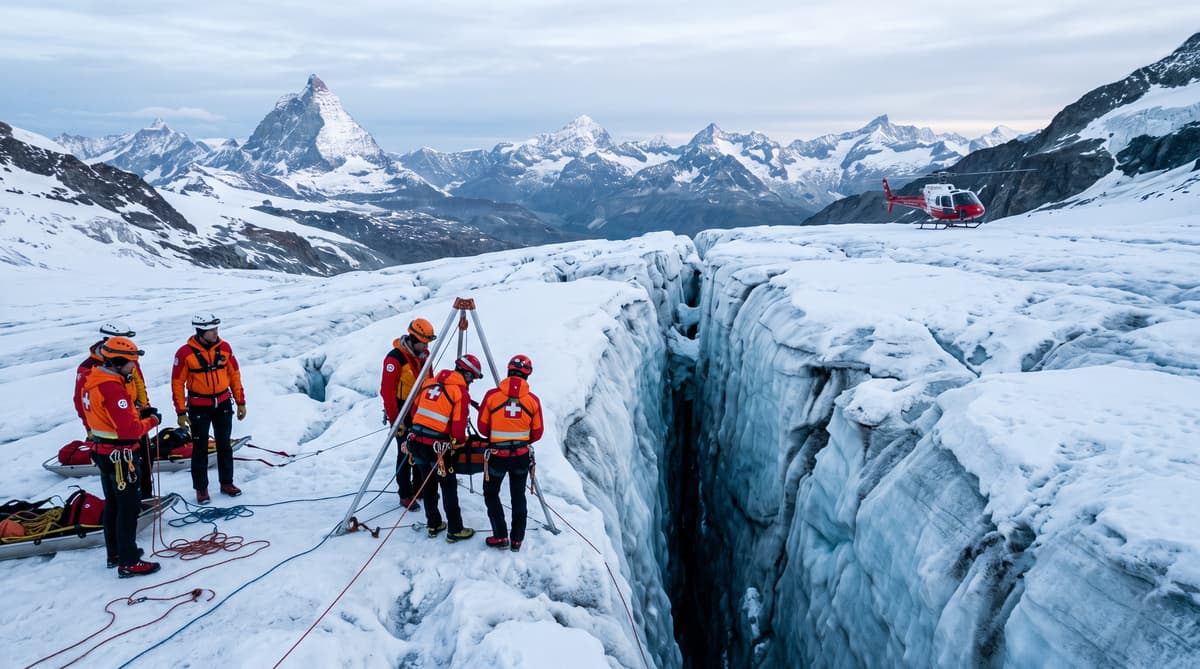
A 55-year-old American tourist died at 3,883 metres above sea level after falling into a crevasse on the Klein Matterhorn glacier above Zermatt, Valais cantonal police said.
Rescuers discovered the man after the fall. Police said he had entered a restricted area that was closed to pedestrians before he went into the crevasse. The circumstances remain under investigation by Valais authorities.
The accident occurred in one of Switzerland’s most prominent high mountain tourism areas. Zermatt draws visitors from around the world for glacier excursions, cable car journeys, skiing and mountaineering. The Klein Matterhorn, also known as Little Matterhorn, sits in a high alpine environment where snow bridges can conceal deep cracks in the ice.
Police have not released the tourist’s name or provided further details about the precise sequence of events. Their account identifies the restricted area as a key part of the initial investigation. The death adds to a summer marked by fatal incidents involving foreign visitors in Swiss mountain terrain.
A Second American Visitor Dies This Summer
The Zermatt death is the second fatality involving an American tourist in the Swiss mountains within two months. On July 6, authorities found the body of a 19-year-old American in a rugged area overlooking Lake Brienz, in canton Bern.
The teenager appeared to have left a marked trail during the descent near Spycheren, a steep area where a fall caused fatal injuries. The available account does not suggest that the two accidents shared the same terrain or circumstances. One occurred on a glacier above Zermatt, while the earlier incident took place on a marked hiking route in the Bernese Oberland.
Together, the cases show the range of hazards facing visitors who enter the Alps. Glaciers can hide crevasses beneath apparently stable snow. Steep hiking terrain can punish even a brief departure from a marked path. Weather, visibility, fatigue and unfamiliarity with alpine routes can further complicate decisions, although authorities have not assigned those factors to either death.
The two cases have prompted renewed attention to route discipline and the need to respect closures in high mountain areas.
Respect the Barriers on Glacier Ground
Valais police said the victim entered an area closed to pedestrians, making the safety perimeter central to the investigation. In glacier country, those barriers and signs mark more than a recommended route. They can indicate unstable ice, concealed crevasses or conditions that rescuers cannot safely manage.
The Klein Matterhorn sits at 3,883 metres, where the altitude itself adds difficulty for visitors who may arrive by lift rather than by a long, gradual ascent. High elevation can reduce physical reserves and affect judgment, while snow and ice can obscure gaps in the glacier. The source material does not state whether altitude sickness, weather or equipment contributed to this death, and Valais authorities have not released a final account.
For visitors, the practical message is direct: remain on open routes, obey barriers and follow local instructions. Conditions can change quickly on glaciers, and a route that appears accessible from a viewing platform may lead toward terrain intended only for trained and properly equipped mountaineers.
Zermatt’s mountain infrastructure gives tourists access to spectacular high altitude landscapes. It does not remove the hazards of the natural environment surrounding them.
Switzerland Tracks a Persistent Visitor Risk
Around 40 to 50 foreign tourists die each year in Swiss mountain sports, according to figures cited by RTS. That annual estimate places the Zermatt death within a wider national pattern involving international visitors and a landscape that attracts millions of people each year.
The figure covers mountain sports across Switzerland, so it does not measure deaths at glaciers alone and cannot be used to predict risk at the Klein Matterhorn. It does, however, underline the scale of the public safety challenge for cantonal authorities, mountain rescue teams and tourism operators. Switzerland’s alpine resorts must serve experienced climbers, casual sightseers and hikers with very different levels of preparation.
The latest fatality will now be examined by Valais authorities, which are investigating how the tourist reached the restricted zone and what happened before the fall. That process may establish whether additional information, barriers or access controls are needed at the site.
For Switzerland, the immediate task is factual and practical: determine the sequence of events, communicate the risks clearly and ensure that visitors understand which routes remain open. The investigation is expected to provide the basis for any further response.