education
Swiss school performance shows warning signs despite strong results
Swiss pupils continue to outperform the OECD average overall, but recent results point to deterioration in some basic skills. Examine the data, the groups and subjects most affected, and the competing explanations for why Switzerland’s strong school system is showing signs of strain.
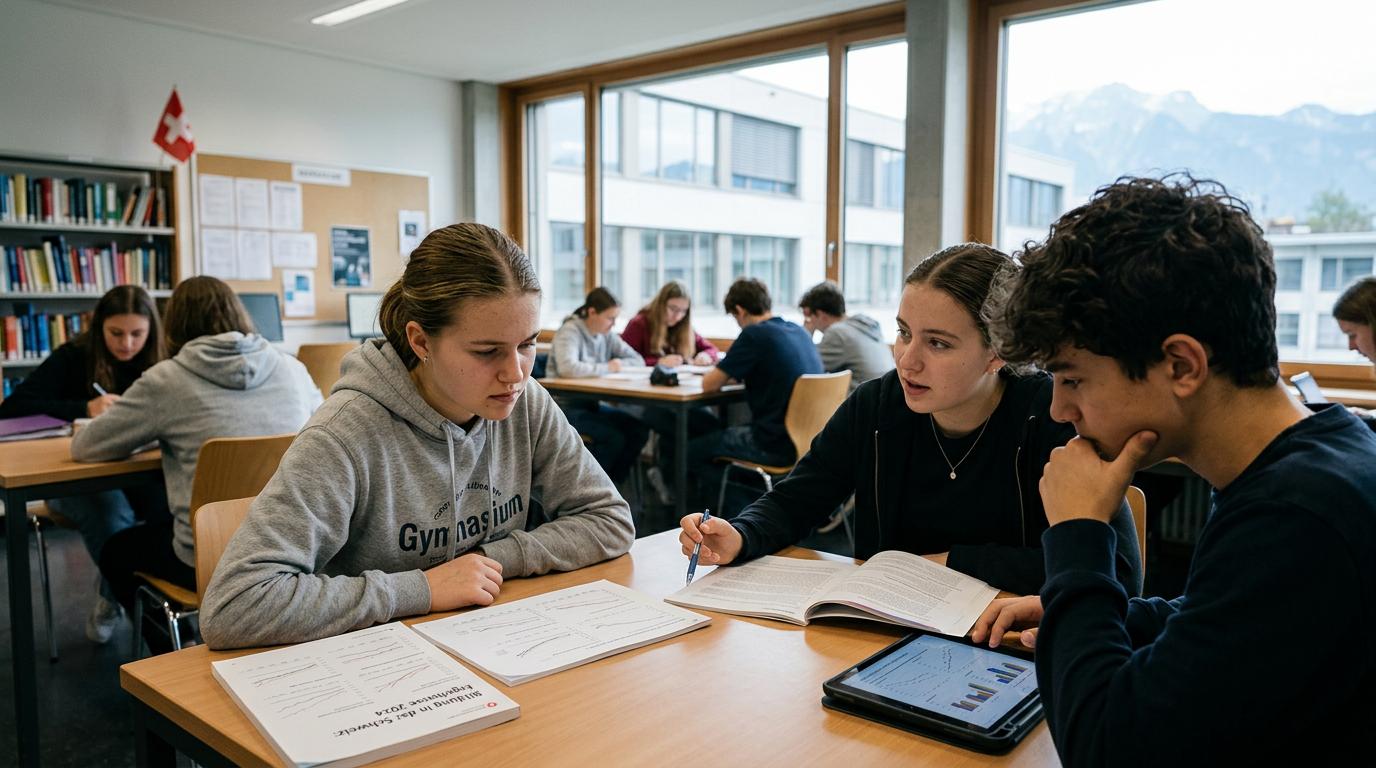
Swiss Results Stay Strong as Basic Skills Slip
Switzerland remains above the OECD average, yet its latest scores expose a weakening grip on basic skills. The country’s 15-year-olds continue to rank among the stronger performers in the rich world. Their results in the latest PISA assessment also show a clear decline in mathematics and reading since 2015.
Swiss pupils scored 499 points in mathematics, compared with 521 in 2015. Reading fell to 470 points, from 492. Science has proved more resilient, slipping from 503 to 501 points. Switzerland also scored 520 points in a new test of model-based problem-solving, which measures how pupils use digital tools to analyse information and develop solutions.
The international ranking still looks respectable. Switzerland placed ninth in mathematics, 13th in problem-solving, 14th in science and around 18th in reading among 91 countries and economies. Those positions can obscure the weakness at the bottom of the results. Twenty-nine percent of 15-year-olds failed to reach the required reading level, while 23% fell short in mathematics and 21% in science.
The figures matter beyond school reports. Reading and numeracy shape access to vocational training, apprenticeships and further education across Switzerland.
Inequality Still Shapes Who Keeps Up
The sharpest concern sits at the lower end of the performance scale. Nearly one in three Swiss 15-year-olds lacks the reading proficiency expected at their age. That weakness can spread across subjects because pupils must understand written instructions, word problems and scientific explanations before they can solve them.
The distribution also complicates claims that Switzerland is becoming more equal. The gap between advantaged and disadvantaged pupils narrowed after 2022, according to the source material. A closer look offers a less comfortable explanation: better-off pupils performed worse. The distance narrowed partly through a decline at the top, rather than a strong improvement among pupils with fewer resources.
Social background, migration history and the language spoken at home remain closely connected to attainment. Pupils who do not speak the language of instruction at home can face additional barriers, particularly when they encounter demanding texts or technical vocabulary. Children from poorer families may also have less access to quiet study space, books, tutoring and digital support.
These pressures cut across Switzerland’s cantonal education system. They affect German-speaking, French-speaking and Italian-speaking regions differently, but the underlying challenge is shared: strong national averages cannot compensate for a large group of pupils leaving compulsory schooling without secure foundations.
Employers Push Schools Back to the Basics
Swiss education leaders are calling for a renewed focus on reading, writing and mathematics. Christophe Darbellay, Valais’s education minister and president of the Swiss Conference of Cantonal Ministers of Education, told RTS that schools may have taken on too many priorities. “Perhaps we have spread ourselves a little too thin,” he said.
Employers and unions have reached a similar diagnosis. Travail.Suisse describes literacy and numeracy as a “common concern”, linking them to equal opportunity and employability. The Swiss Union of Arts and Crafts wants compulsory schooling to give reading, writing and mathematics a more central role. The Swiss Employers’ Confederation warns that weak basic skills could reduce the supply of skilled workers.
Economiesuisse has already reported shortcomings in reading and arithmetic among some young people entering vocational training. Its survey was not representative, so it cannot measure the entire Swiss cohort. Its findings nevertheless align with the PISA pattern and with concerns heard by companies that depend on apprenticeships.
Switzerland’s vocational system gives these warnings particular weight. Apprentices move quickly from school into workplaces where they must read instructions, calculate quantities, interpret regulations and communicate with customers. Employers can provide support, but they cannot replace the systematic teaching of core skills during compulsory education.
Covid, Screens and AI Complicate the Diagnosis
Several forces may be pulling down results, but the evidence does not identify a single culprit. The pupils tested grew up during the Covid pandemic, when school closures and disrupted routines interrupted learning. Absenteeism has also remained high across many wealthy countries. Those effects may still be visible in teenagers’ concentration, study habits and confidence.
Technology adds another pressure. Andreas Schleicher, the OECD’s education director, has pointed to smartphones, social media and digital distraction as possible reasons pupils spend less time concentrating on demanding texts. He has also identified more “hasty readers”, pupils who rush through assessments and make avoidable mistakes. Weak reading can then affect mathematics and science, where complex instructions are part of the task.
Artificial intelligence has complicated classroom practice further. Swiss teenagers use AI for schoolwork more than many of their OECD peers. The data do not prove that AI causes weaker learning. They do show that schools must distinguish between a tool that helps pupils test an idea and one that completes the thinking for them.
Teaching methods remain contested. Critics of pupil-led, project-based and discovery learning say these approaches can reduce time for explicit instruction and practice. Supporters reject one-size-fits-all explanations. The available results support caution, not a sweeping verdict on any single method.
Switzerland Must Rebuild Foundations Without Losing Its Edge
Switzerland’s next education debate will concern priorities, evidence and delivery across 26 cantons. The latest PISA results do not describe a failing school system. They describe a system with international strengths that is losing ground in abilities pupils need every day. Mathematics and reading have weakened since 2015, while science has remained broadly stable and digital problem-solving has produced a strong result.
That combination argues against a simple retreat from modern learning. Pupils need digital competence, collaboration and the ability to analyse information. They also need sustained practice in reading difficult texts, writing clearly and handling numbers. The policy challenge is to fit those aims together without allowing core instruction to become secondary.
Finland offers a warning against easy education fashions. It fell from the top ranks after 2006, although its decline does not prove that progressive teaching or its 2016 curriculum caused the change. Switzerland should assess methods through evidence rather than reputation. Smaller classes and higher spending alone may not guarantee improvement either.
Cantonal authorities, schools and employers will need better support for pupils learning the language of instruction, stronger early identification of difficulties and consistent attention to basic skills. The immediate test will be whether the next cohort improves at the bottom of the distribution, where national averages reveal the least.