Stadler Rail
Stadler wins CHF300 million Saudi rail contract
Stadler Rail has secured a further CHF300 million order for ten Intercity trains from Saudi Arabia, doubling the fleet covered by its existing contract.
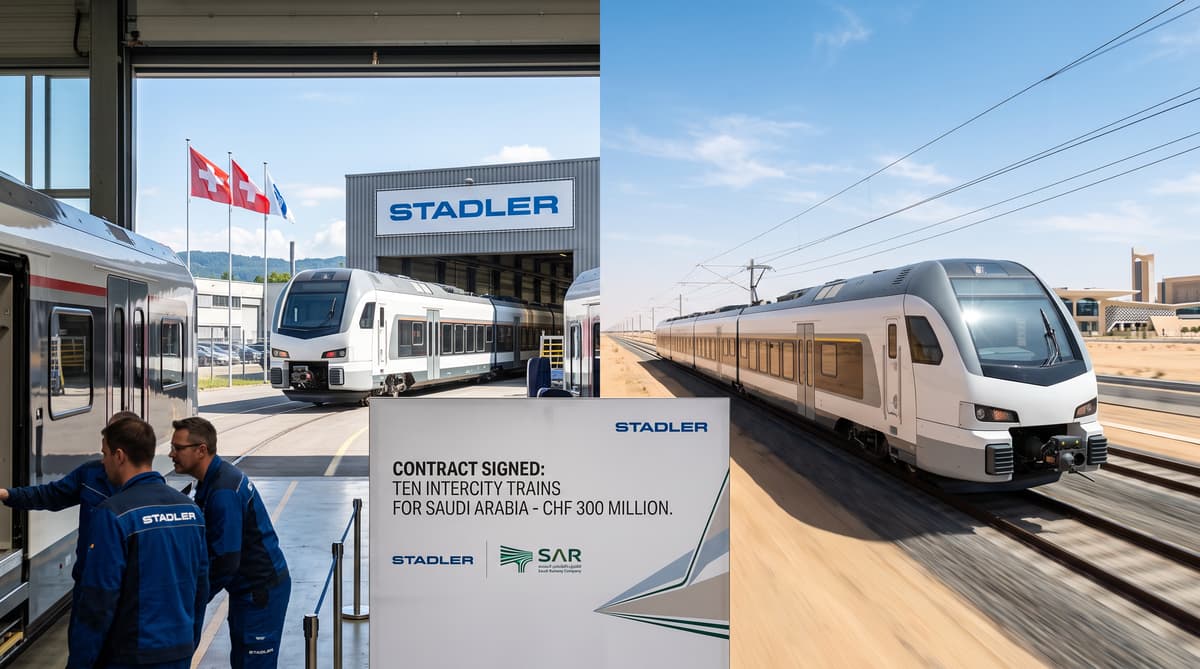
Stadler Rail has secured a further CHF300 million order from Saudi Arabian Railways, doubling the fleet covered by its Saudi contract. The Swiss train maker will supply ten additional Intercity trains, taking the specially developed fleet from ten to 20 trains.
Saudi Arabian Railways, known as SAR, exercised an option in the contract signed with Stadler two years ago. That wider agreement was valued at around CHF600 million. The second order gives Stadler a larger production run and confirms that the first Saudi fleet remains central to the operator’s east-west passenger plans.
The trains will connect Riyadh, Hofuf, Abkaik and Dammam, linking the Saudi capital with communities and industrial centres in the country’s east. Commercial passenger services are expected to begin in the second half of 2029.
For Switzerland, the order provides another export win for a manufacturer whose products are built for specialised markets. Production of the new trains will follow directly after the first series, which began in April 2026. Stadler said manufacturing will take place largely at its Swiss factories, with the car bodies for the power cars supplied by its plant in Valencia, Spain.
Stadler Builds a Gulf Rail Position
The Saudi contract places Stadler inside one of the Gulf’s most closely watched rail markets. Saudi Arabia is expanding rail links that connect its capital, eastern industrial zones and major population centres. SAR’s decision to exercise the option shows that the operator wants more capacity on the same corridor and is prepared to extend its relationship with the Swiss supplier.
The order also builds on Stadler’s first Saudi deal, announced in February 2024. That agreement was Stadler’s first order for the Gulf region and carried a potential value of around CHF600 million. The additional ten trains now convert that potential into a larger committed fleet.
The east-west line will serve Riyadh, Hofuf, Abkaik and Dammam. The route passes through a region where passenger rail must work across long distances and severe climatic conditions. Stadler’s trains therefore need to meet Saudi operating requirements from the outset, rather than rely on equipment designed for a temperate European network.
The deal strengthens the Swiss company’s credentials in the Gulf. It also gives Stadler a reference fleet in Saudi Arabia, where future rail projects could depend on proven performance, local operating experience and reliable support.
Engineer for Heat, Sand and Distance
Saudi heat and sand have shaped the trains’ engineering from the beginning. The Intercity sets will measure around 175 metres and carry approximately 320 passengers. Stadler has designed them for the climatic and operational conditions expected on the Saudi network.
The trains will feature two independent power cars, along with numerous redundant systems. That configuration is intended to support resilience on a long route where a technical failure can create major disruption. Special protection and filtration systems will help shield critical equipment from extreme heat and airborne sand.
The environmental demands are practical and persistent. High temperatures affect cooling, electrical equipment and passenger comfort. Fine sand can enter machinery, reduce filter performance and accelerate wear. A train designed for Saudi Arabia must keep running through those conditions while maintaining a level of reliability suitable for scheduled Intercity services.
The specifications also illustrate how Swiss industrial exports are often adapted rather than simply shipped. Stadler’s Swiss factories will produce most of the new trains, while the Valencia plant will provide the power car bodies. The programme combines Swiss manufacturing with a cross-border supply chain tailored to SAR’s operational requirements.
Turn Trains Into Long-Term Business
The expanded maintenance agreement gives Stadler a revenue stream that extends beyond delivery day. SAR will extend the existing maintenance contract to cover the ten additional trains. That arrangement links the value of the order to the trains’ performance throughout their operating life, not only to their manufacture.
Maintenance contracts can provide manufacturers with recurring work, technical data and a long-term relationship with the operator. For Stadler, the Saudi fleet offers an opportunity to support equipment in a demanding environment and demonstrate how its systems perform over years of heat, dust and intensive use.
The production timetable helps keep the programme moving. Stadler began manufacturing the first series in April 2026, and production of the additional trains will follow directly. This sequencing should allow the company to retain project knowledge, supplier coordination and specialised production capacity between the two batches.
The first passenger services are scheduled for the second half of 2029. Until then, Stadler and SAR must complete manufacturing, testing, delivery and operational preparation. The maintenance extension will become particularly important once the trains enter regular service on the long east-west route.
Set the Course for 2029
The CHF300 million option gives Stadler a larger Saudi foothold while keeping Swiss production at the centre of the programme. Most of the new trains will be built in Switzerland, supporting work across the company’s manufacturing and engineering operations. Valencia will supply the power car bodies, underlining the European production network behind the project.
The order is significant for Stadler’s export profile because it expands the company’s first Gulf contract into a fleet of 20 trains. It also creates an operating reference on a route that will test rolling stock under conditions very different from those found on Swiss railways.
For Saudi Arabia, the trains will add capacity to a corridor connecting Riyadh with Hofuf, Abkaik and Dammam. For Stadler, the next milestones are concrete: complete the second production series, validate the heat and sand protection systems, and prepare the fleet for passenger service from late 2029.
The outcome will be measured in daily reliability, passenger capacity and the quality of maintenance delivered over time. Those results will shape Stadler’s standing with SAR and its prospects in a Gulf market investing in intercity rail.