ski resorts
Protected wetland forces Swiss ski resort to scale back snowmaking
A major snowmaking project in the Leysin-Les Mosses region has been scaled back after federal environmental rules blocked 175 planned snow cannons in a protected wetland. Examine the legal decision, the future 30–40-cannon alternative at Leysin and what it reveals about the conflict between Alpine tourism, water use and conservation.
Scrap the Regional Plan
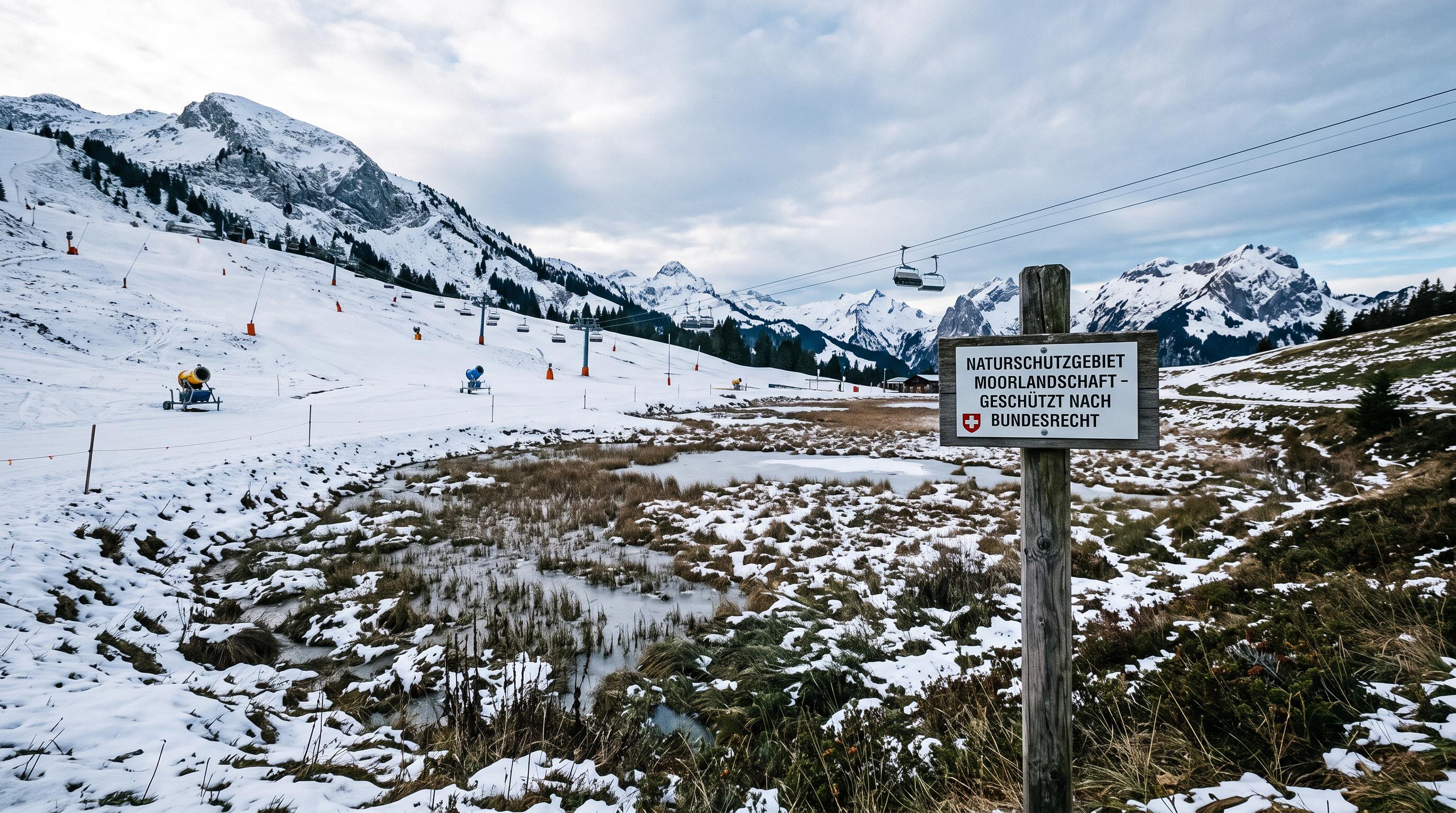
The 175-cannon plan for Leysin and Les Mosses is over. Télé Leysin-Les Mosses-La Lécherette, known as TLML, has abandoned the regional snowmaking project after federal environmental rules blocked construction in the protected wetland at Les Mosses. The decision, announced by TLML and the canton of Vaud on September 18, 2026, removes a major infrastructure proposal from the Alpine resort's winter strategy.
The company will now concentrate on Leysin, where it is considering 30 to 40 new snow cannons in the sectors of Aï, Brion, Les Fers and Choulet. Two chairlifts in those areas have recently been rebuilt. A new public consultation is expected by the end of 2026.
The retreat follows years of objections to a scheme launched in 2018. Its original ambition was to secure skiing across both resorts by transporting water from Lake Hongrin through roughly 20 kilometres of pipes. Hundreds of objections challenged the project's environmental and resource demands. The federal protection status of the wetland has now settled the most consequential legal issue. Vaud and TLML said further appeals could have prolonged proceedings for several years and left the project's outcome uncertain.
Defend the Wetland
Federal wetland protection has drawn a legal line through development at Les Mosses. The site is classified as a wetland of national importance, and the canton and TLML said planned tourist facilities there are no longer compatible with federal law. That finding forced the operator to separate the future of the two linked ski areas.
The legal consequences reach beyond a single permit. The original project faced hundreds of objections, and the operator warned that appeals could have extended the procedure by several years. Jean-Marc Udriot, TLML's chair, told Keystone-ATS that the directors had to “take responsibility” because the project was “heading for a dead end”.
Protected wetlands perform functions that are especially relevant in a warming Alpine landscape. They store water, support plant and animal life, and form part of Switzerland's nationally designated natural heritage. The source material does not quantify the project's expected water consumption or establish a court ruling on every element of the scheme. It does show how environmental law can halt infrastructure designed to keep a traditional winter economy operating.
For Vaud's authorities, the decision also narrows the scope of public planning. Support can now focus on a smaller Leysin project, while Les Mosses must pursue a different tourism model.
Target Leysin's Key Slopes
Leysin's replacement project is designed around four key sectors and a much smaller footprint. TLML is assessing 30 to 40 snow cannons for Aï, Brion, Les Fers and Choulet, areas linked to recently rebuilt chairlifts. The operator says the equipment would improve snow reliability, support more consistent winter operations and strengthen the ski area's appeal.
The revised plan still needs a public consultation, scheduled by the end of 2026. Approval is therefore not guaranteed. Cantonal funding has been secured until August 2030, and Vaud is seeking an extension of planned federal contributions. Those dates give the project a financial framework, while the consultation will determine how residents, environmental groups and other stakeholders respond to the narrower design.
TLML says winter sports in the region provide 37 full-time jobs. That figure helps explain why the operator continues to seek technical protection against unreliable natural snow. Skiing supports lifts, instruction, maintenance and related services in a mountain community where the winter season carries economic weight.
The revised proposal also signals a more targeted approach. Rather than extending snowmaking across the entire Leysin-Les Mosses network, TLML is prioritising slopes that connect to upgraded lift infrastructure and are considered central to future operations.
Build Beyond the Ski Season
Les Mosses will rely on natural snow while TLML accelerates a four-season strategy. The company says downhill skiing will continue there as long as snow cover allows. Without the planned cannons, the resort cannot offer the same engineered snow guarantee proposed for Leysin, placing greater weight on weather conditions and on activities outside the traditional ski calendar.
TLML says upcoming meetings with stakeholders will identify projects that can support sustainable tourism adapted to climate change. The company has not specified which new attractions or services those meetings will produce. Its stated direction is clear: Les Mosses must retain a tourism role even when snow is insufficient for regular downhill operations.
That shift reflects a wider pressure across Switzerland. Resorts are investing in snowmaking as temperatures rise, while water use, electricity demand, construction impacts and ecological protection face closer scrutiny. The earlier regional plan drew criticism as a project “from another era”, according to the source material, with opponents describing it as water and energy intensive and damaging to local flora and fauna.
The decision leaves the two destinations with different operating models. Leysin will seek a limited technical intervention around upgraded lifts. Les Mosses will test whether a broader visitor offer can offset shorter or less predictable ski seasons.
Redraw Switzerland's Alpine Future
The Leysin decision puts Switzerland's Alpine adaptation debate into a precise local frame. A resort needs dependable winter conditions to protect jobs and recently renewed lift infrastructure. A protected wetland carries legal status that can stop a project before construction begins. Between those interests sit questions about water transfers, energy use and the duration of the ski season.
The original proposal connected Lake Hongrin to two resort areas through a 20-kilometre pipeline network. Its abandonment does not end snowmaking in the Vaud Alps. It moves the investment toward a smaller Leysin scheme, subject to consultation and approval. Nor does it end skiing at Les Mosses. Natural snow will continue to determine when downhill operations can open there.
Vaud's funding commitments through August 2030 give officials and TLML time to refine the Leysin proposal and develop alternatives for Les Mosses. The canton is also seeking continued federal support, showing that the issue remains tied to public policy as well as private resort economics.
For Swiss mountain communities, the next phase will be measured in permits, operating days, jobs and visitor numbers. The facts from Les Mosses offer a clear precedent: climate adaptation infrastructure must fit within environmental law, and resort planning now extends beyond the ski piste.