asylum
Kandersteg asylum-centre plan abandoned after local opposition
Bern has abandoned plans to open an asylum accommodation centre for up to 120 people in Kandersteg after the building’s owner withdrew the offer amid local hostility. The canton says it still needs to find additional accommodation for asylum seekers in the Bernese Oberland.
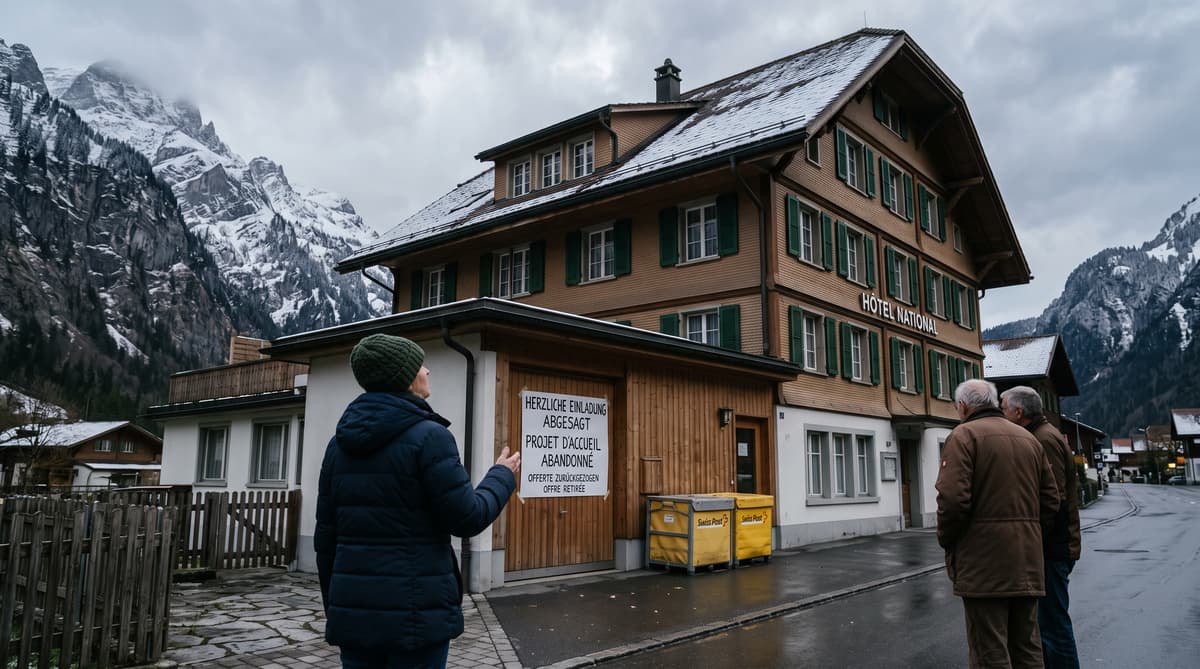
Bern has abandoned a plan to accommodate up to 120 asylum seekers in Kandersteg. The decision followed the withdrawal of the building owner’s offer, after opposition to the project intensified in the Bernese mountain village.
The proposed centre was to occupy the former Kandersteg Institute. The Canton of Bern had planned a collective facility there, but the project met resistance from the local authority from the beginning. The owner later informed the canton’s Department of Health, Social Affairs and Integration that the premises would no longer be available.
The canton announced the decision on September 21, 2026, saying it regretted the withdrawal. It attributed the owner’s decision to a tense local situation and growing hostility from part of the population.
The collapse of the plan leaves Bern with a practical problem. The canton still needs more accommodation for asylum seekers in the Bernese Oberland, and officials say they must continue searching for sites that meet Switzerland’s legal requirements. Kandersteg will not provide that capacity, despite the original plan to place a facility for up to 120 people at the former institute.
Local Opposition Closes the Door
The former Kandersteg Institute was set to provide space for as many as 120 people. The site offered the canton a potential collective accommodation facility in a region where officials say more capacity is still needed.
The proposal did not advance quietly. Kandersteg’s local authority opposed the centre from the outset, according to the Keystone-SDA report. Resistance then grew within the village, creating what the canton described as a tense situation.
The property owner ultimately withdrew the offer. That decision removed the physical site from consideration and ended the canton’s immediate plan for Kandersteg. The Department of Health, Social Affairs and Integration received the owner’s notification that the building would no longer be made available.
The available information does not identify individual opponents, quantify the size of the opposition or detail any formal vote by residents. It does establish the sequence of events: local authority opposition, growing hostility, and the owner’s decision to stop the project. That sequence shows how accommodation planning can depend on cooperation from property owners and local communities, even when cantonal authorities identify a regional need.
Bern Searches for a New Site
The canton says the accommodation gap in the Bernese Oberland remains. Bern has acknowledged the end of the Kandersteg project while stressing that its wider responsibility has not changed.
Officials must provide suitable accommodation for asylum seekers in line with legal requirements. The canton therefore plans to keep exploring alternatives, including the purchase of properties in the region. The statement did not name a replacement site or set a timetable for securing one.
That search will take place against the backdrop of a failed agreement in Kandersteg. The canton had identified a building and a possible capacity of 120 residents, but it lost access to the premises when the owner withdrew the offer. Any new option will require a suitable property and a workable relationship with the community where it is located.
Bern’s announcement contains no new figures on the number of asylum seekers awaiting accommodation in the Bernese Oberland. It does make the administrative priority clear: the canton must find additional capacity. The next phase will focus on properties that can be acquired or otherwise secured, rather than on reopening the Kandersteg proposal.
The Capacity Problem Moves On
The Kandersteg decision shifts the dispute from one building to the canton’s broader accommodation policy. Bern now has to balance regional capacity requirements with the willingness of property owners and communities to host asylum facilities.
The canton says it regrets the owner’s withdrawal, but it has accepted that the former institute will not be made available. Its stated response is to examine properties for purchase across the Bernese Oberland. That approach could give the authorities more control over future sites, although the source report does not specify which properties are under consideration or how much funding would be required.
For Kandersteg, the immediate outcome is the cancellation of a centre planned for up to 120 people. For Bern, the unresolved issue is accommodation capacity. The canton’s next decisions will determine where that capacity is created and how local authorities are involved.
The abandoned plan also places local opposition at the centre of Switzerland’s migration debate. The episode demonstrates the operational consequences when a project loses both political backing at municipal level and access to the proposed premises. Bern must now restart its search in a region where the need, according to the canton, remains.