Greta Thunberg
Greta Thunberg to discuss Western Sahara in Zurich
Greta Thunberg is due to appear at the Zurich Film Festival for a discussion on Western Sahara following the premiere of a documentary about Sahrawi activist Najla Mohamed Lamin.
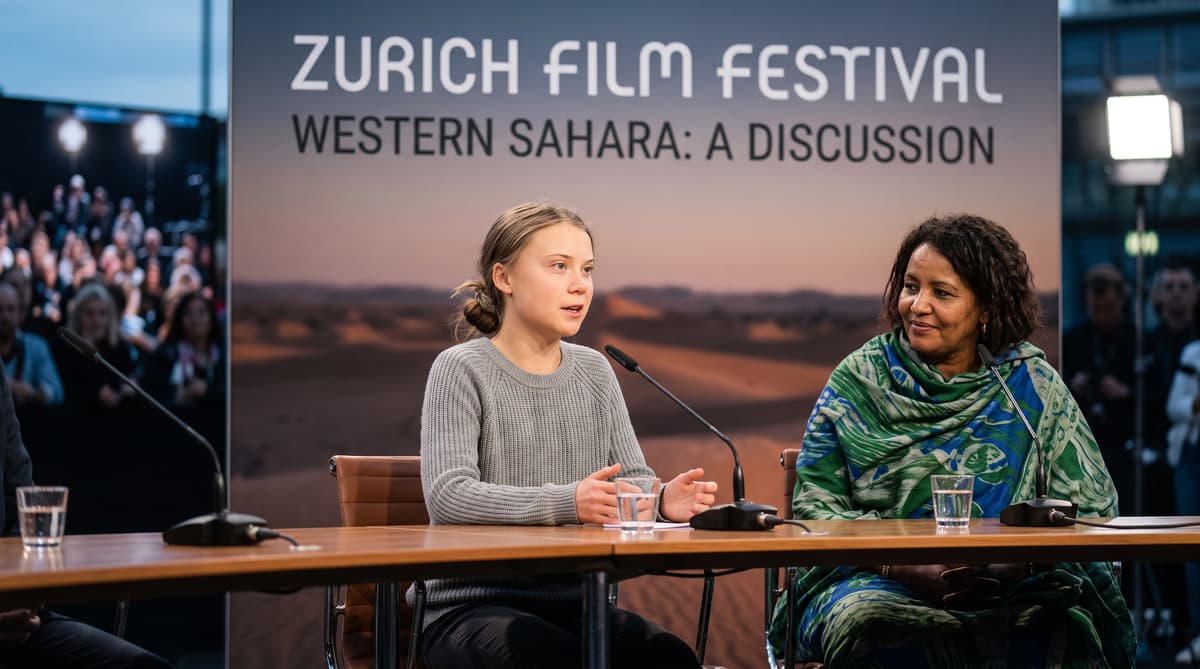
Greta Thunberg is due to bring her climate and social justice campaign to the Zurich Film Festival on Tuesday, September 29, 2026. The festival announced the appearance as a last-minute programme change on its Instagram channel on Monday, according to Swissinfo. Thunberg will join a panel on Western Sahara after the world premiere of My Home of Wind and Sand.
The event places a long-running Sahrawi story at the centre of one of Switzerland’s most visible film gatherings. The documentary follows activist Najla Mohamed Lamin, who was born in a refugee camp and has worked peacefully on Western Sahara while raising two children. Director Patrick Wally filmed her life and convictions over ten years, including a period marked by renewed tensions.
The screening will take place with Lamin, Wally and Thunberg present. Sylvia Valentin will lead the question and answer session, which will also include questions from the audience. The festival’s decision gives viewers a direct opportunity to hear from the film’s subject and its director, alongside an activist who has increasingly addressed causes beyond climate policy.
The Documentary Traces Lamin’s Decade
My Home of Wind and Sand follows Najla Mohamed Lamin across 10 years of activism, family life and political uncertainty. Patrick Wally’s documentary centres on Lamin’s experience as a Sahrawi activist born in a refugee camp. The film traces her peaceful involvement in the Western Sahara and records how renewed tensions shape her choices and convictions.
Its perspective is personal rather than statistical. Lamin’s story moves from displacement and political commitment into motherhood. She becomes a parent to two children while continuing to reflect on the cause that has shaped her life. That combination gives the film a domestic scale, linking public activism to decisions made within a family.
The Zurich premiere also brings the filmmaker and the central subject into the same room as the audience. Their presence matters for a documentary dealing with identity, displacement and contested political realities. Viewers will be able to question Wally about the film’s decade-long approach and ask Lamin about the experiences behind it.
The festival has not announced further programme details in the supplied report. The screening and discussion are the latest public setting in which the Sahrawi issue will be presented to a Swiss audience through film and first-hand testimony.
Thunberg Links the Cause to Social Justice
Thunberg’s involvement follows a 2025 visit to a Sahrawi refugee camp. Swiss news outlet Blick, cited by Swissinfo, reported the visit. Since then, Thunberg has highlighted what she sees as links between the Sahrawi struggle and wider questions of climate and social justice.
Her appearance in Zurich extends a public profile built through the Fridays for Future movement into an issue that receives less attention in Swiss cultural and political debate. The format also differs from a street demonstration or climate rally. It places the discussion after a film, with questions from an audience and contributions from the activist at the centre of the documentary.
Western Sahara has also entered Swiss legal and administrative discussions. In August 2021, the Swiss Federal Court upheld a move by Swiss authorities to designate a refugee from Western Sahara as “without nationality”, according to a related Swissinfo report. That case illustrates how the region’s unresolved status can affect people dealing with Swiss institutions.
The Zurich panel will therefore connect cinema, activism and a Swiss perspective on displacement. It will give Thunberg a platform to explain her position, while Lamin and Wally can ground the conversation in the film’s subject and production.
Zurich Audience Gets Direct Questions
The Zurich audience will hear directly from the film’s subject, director and a prominent international activist. Sylvia Valentin will moderate the question and answer session after the premiere, creating a format that allows the discussion to move beyond the screening itself. Audience members will be able to put questions to Thunberg, Lamin and Wally.
The event also arrives after Thunberg’s climate activism has reached a substantial Swiss audience. A 2023 Swissinfo report cited research indicating that 30% of people in Switzerland had changed aspects of their everyday habits because of the Fridays for Future movement. That figure belongs to an earlier report and does not measure public opinion on Western Sahara, but it helps explain why her participation is likely to attract attention at the festival.
For Swiss viewers, the evening offers several points of entry: a documentary about a Sahrawi activist, a director’s account of a ten-year project and Thunberg’s interpretation of the relationship between social justice and climate politics. The organisers’ late change to the programme has placed that conversation in the festival spotlight.
The immediate next step is the screening and public discussion in Zurich on Tuesday. Its wider impact will depend on how audiences, Swiss media and institutions continue to engage with the issues raised by the film.