migration
Bern court lets undocumented mother remain with Swiss children
A Bern court has allowed an undocumented mother of four Swiss children to remain in the country, prioritising family life and the children’s educational needs over the absence of identity documents. Report the ruling’s reasoning and its significance for residence cases involving families and undocumented migrants.
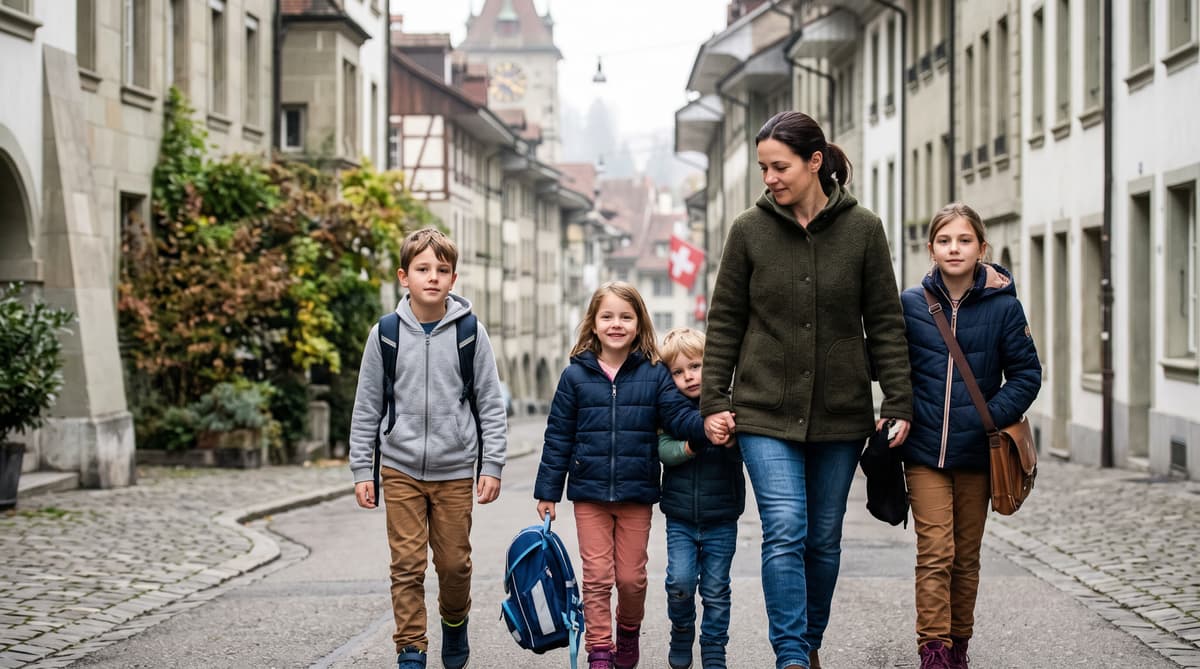
A Bern court has ordered officials to let a mother of four Swiss children remain in Switzerland, overturning a residence decision based on her inability to produce valid identity documents. The Bern Administrative Court upheld her appeal against the cantonal Security Directorate and instructed the Office for Population Services to issue her a residence permit under the family reunification scheme.
The ruling gives particular weight to the children’s circumstances. Three of the four children have special educational needs, and their father works in Switzerland. The court concluded that expecting the children and their father to leave the country would be unreasonable. It therefore placed the family’s right to remain together above the authorities’ demand for definitive proof of the mother’s identity.
The decision, published on Thursday, October 1, 2026, does not erase the immigration history that brought the case before the court. The woman entered Switzerland without the required visa after her husband and children had moved there. Her case shows how Swiss residence proceedings can turn on the practical effects of removal on children, alongside formal questions about documentation and entry status.
Identity papers could not decide the case
The mother’s missing identity papers were the decisive obstacle for Bern migration officials until the court reassessed the balance of interests. The cantonal Migration Service had refused her residence permit because she could not provide valid documents from her country of origin. Authorities know only that she comes from East Africa.
The uncertainty has followed her for years. She entered the United Kingdom in August 2008 and applied for asylum there four times, with each application unsuccessful. A linguistic analysis carried out by British authorities identified her as Ethiopian rather than Eritrean, contrary to the nationality she had claimed. The court’s published reasoning does not resolve every question surrounding her identity. It does establish that the lack of conclusive documentation cannot automatically outweigh the family’s circumstances.
That distinction matters in practice. Identity verification remains a public interest in residence cases, particularly when authorities assess immigration histories and legal entitlements. In this case, however, the court found that the consequences of separating the mother from her children carried greater weight. The judgment directs the canton to grant a permit, rather than sending the case back for another refusal on the same ground.
Education shaped the court’s judgment
The children’s education became the strongest practical argument against removal. The Bern Administrative Court recorded that three of the four children have special educational needs, a fact that shaped its assessment of what relocation would mean. The judgment also noted that the children’s father is working in Switzerland, making emigration for the entire family especially difficult.
The family’s move to Switzerland unfolded in stages. The mother married her Swiss partner in the United Kingdom in October 2021. He later returned to Switzerland for work, and the children followed him over time. The mother eventually entered Switzerland without the visa required for her stay. Her residence application therefore faced both a documentation problem and an irregular-entry history.
The court focused on the concrete impact of removal rather than treating those issues in isolation. A move could disrupt schooling, support arrangements and the children’s relationship with both parents. The ruling does not create a general exemption for undocumented migrants. It demonstrates that, where Swiss children depend on established family and educational arrangements, the authorities must assess those effects closely before refusing residence.
A precedent for family residence cases
The decision sets a clear signal for future residence disputes involving Swiss children, while leaving the wider rules intact. Bern’s Administrative Court did not dismiss the importance of identity documents or lawful entry. It held that those interests must be weighed against the family’s circumstances, including the children’s welfare, their schooling and the feasibility of relocation.
The outcome is binding for the case before the court: the Office for Population Services must grant the mother a residence permit. Other families cannot assume that the same result will follow automatically. Each application will depend on its facts, including the children’s nationality, their links to Switzerland, their care arrangements and the practical consequences of separation or departure.
For Swiss authorities, the judgment underlines the need for a full family assessment when undocumented parents seek residence through their children or a Swiss spouse. For families facing similar proceedings, educational needs and the working parent’s situation can become central evidence. The ruling also adds to an active legal debate about how Switzerland balances migration controls with family unity. Its immediate effect is specific, but its reasoning will be closely watched in cantonal residence cases.